Concussion Testing Management Kelowna
Comprehensive concussion assessment & recovery plans in Kelowna. Expert care at Pro Motion Clinic. Call (236)-420-0660.
Your head took a hit. Maybe it happened on the ice at MNP Place, during a volleyball game at City Park, or in a car accident on Highway 97. Now you’re feeling off—headaches won’t quit, you’re dizzy when you stand up, or words seem to float on the page when you try to read.
Here’s what most people don’t know about concussions: your brain doesn’t have to slam against your skull for you to have one. The injury happens at a cellular level. Your brain cells get shaken up, blood flow changes, and everything gets scrambled. That’s why you can feel fine right after an impact but wake up the next day feeling like you got hit by a truck.
What Actually Happens When You Get a Concussion
Think of your brain like a bowl of jello sitting on your dashboard. When your car suddenly stops, that jello slides forward and bounces back. Your brain does the same thing inside your skull when you take a hit. The problem is, your brain isn’t jello—it’s billions of cells all talking to each other.
When these cells get jolted around, they can’t send messages the way they should. Some cells slow down. Others stop working right. Blood flow drops in certain areas. This is why you might forget what you were saying mid-sentence or feel exhausted after reading three paragraphs.
The tricky part? No two concussions look the same. You might get headaches while someone else feels dizzy. Your friend might sleep 14 hours a day while you can’t fall asleep at all. This is why having a team that knows how to test and track what’s actually going on in your brain makes all the difference.
Why Concussion Testing and Management Kelowna Matters
You can’t fix what you can’t measure. That’s the whole point of proper concussion testing.
At Pro Motion Clinic in Kelowna, we don’t just ask how you’re feeling and send you home. We run tests that show us exactly where your brain is struggling. Balance tests tell us if your inner ear is affected. Eye movement tests show us if your visual system took a hit. Cognitive tests reveal if your processing speed dropped.
These aren’t pass-or-fail tests. They’re measurements. They give us a starting point so we know where you are now and can track where you’re going as you heal.
Here’s why this matters: if you rush back to work, sports, or even just normal life too soon, you can make things worse. Your brain needs time to heal, but it also needs the right kind of activity at the right time. Too much rest can actually slow your recovery. Too much activity can set you back weeks.
Good concussion management means finding that sweet spot where you’re doing enough to help your brain heal but not so much that you’re making it worse.
How We Test for Concussions
When you walk into our clinic at 3030 Pandosy Street, we start with a real conversation. Not a rushed “how are you feeling” but a deep dive into what’s happening.
Did the headaches start right away or three days later? Does light bother you? Can you follow a conversation when there’s background noise? Do you feel foggy in the morning or at night?
Then we move into physical testing. We check your neck because neck injuries often come with concussions—especially if you got hurt playing hockey at MNP Place or took a fall while skiing at Big White. Neck problems can cause headaches and dizziness that look just like concussion symptoms.
We test your balance. Stand on one foot. Close your eyes. Walk in a straight line. These simple movements tell us a lot about how your brain is coordinating with your body.
We check your eye movements. Can you follow a pen smoothly from left to right? Do your eyes work together or do they drift? Visual problems are huge after concussions but often get missed.
We also look at how you process information. We might have you memorize a list of words or do some quick reaction tests. Your brain speed matters just as much as your balance.
All of this together paints a picture of where your brain is at right now.
The Pro Motion Approach to Concussion Recovery
Recovery isn’t about sitting in a dark room until your head stops hurting. That old advice? It’s outdated.
Modern concussion management combines patient education, exercise rehab, manual therapy, and yes—even Shockwave Therapy when it’s needed.
Patient Education
You need to understand what’s happening in your brain so you can make smart choices. Should you go to your kid’s loud birthday party at Scandia? Should you try to finish that report your boss wants? We help you figure out what activities are okay and which ones to avoid.
Exercise Rehab
Your body needs to move, but in the right way. We start slow—maybe just a short walk around the Rotary Marsh or some light stationary bike work. We track your heart rate and symptoms. As you improve, we add more. Exercise actually helps your brain heal by increasing blood flow and releasing healing chemicals.
Manual Therapy
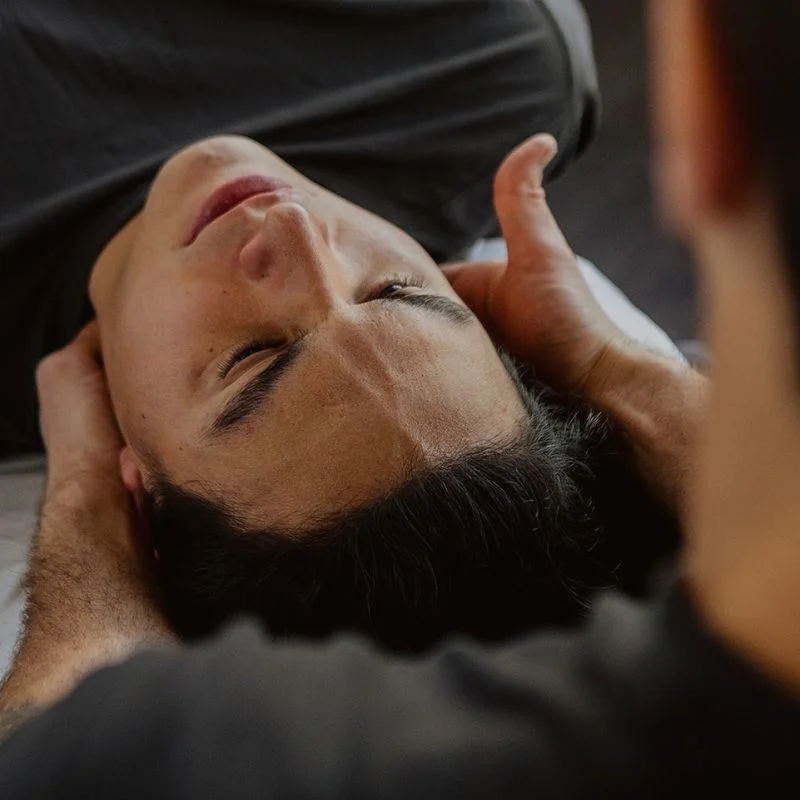
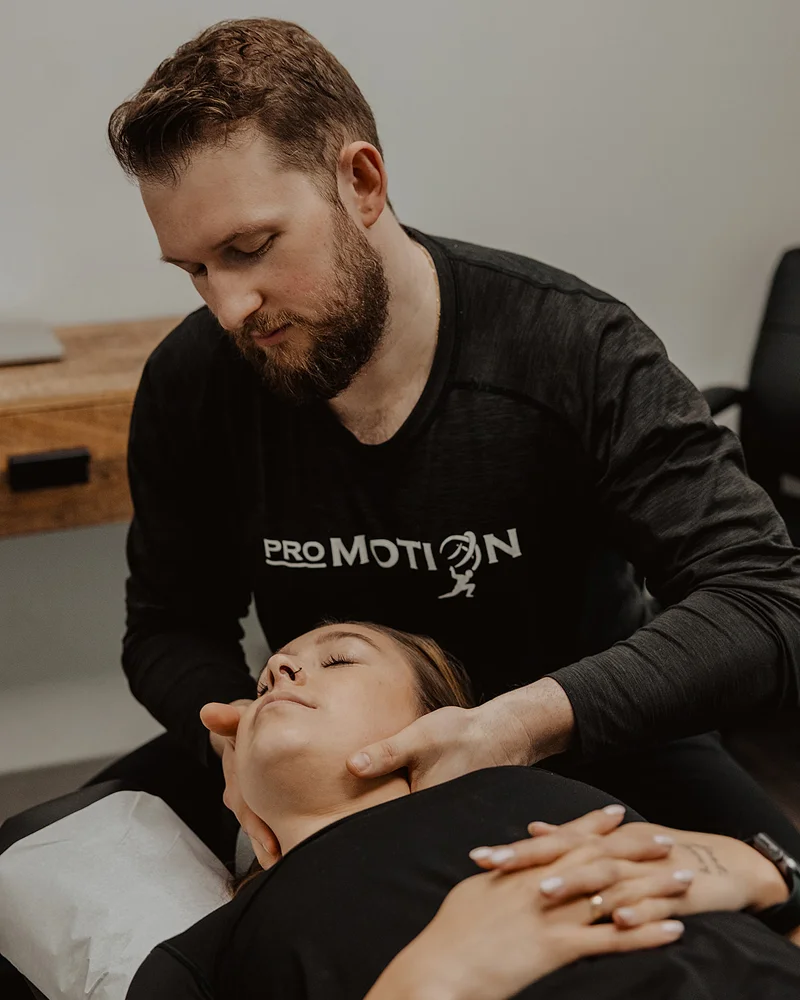
This is where chiropractic care shines. If your neck got injured along with your head (which happens more often than you’d think), we need to fix it. Neck pain can cause headaches that feel just like concussion headaches. Spinal adjustments help restore proper movement and reduce pain signals going to your brain.
Shockwave Therapy
The key is that we combine all these pieces based on what YOUR tests show. We’re not guessing. We’re not giving everyone the same treatment. We’re building a plan around your specific injury.
What Makes Our Team Different
Pro Motion Clinic was founded to create a place where active people could get the care they need to stay active. Our team has worked with NHL players, Olympic athletes, and weekend warriors who just want to get back to their mountain bike rides in Myra Canyon.
But here’s what really sets our team apart: we talk to each other.
Your Chiropractor shares notes with your Massage Therapist. Your Kinesiologist knows what exercises your Chiropractor prescribed. Everyone is on the same page about your recovery plan.
This matters because concussions are complex. You might need manual therapy for your neck, vestibular rehab for your dizziness, and exercise therapy for your fatigue—all at the same time. When your team actually works together instead of sending you to five different places that don’t communicate, you heal faster.
Plus, we’re all athletes ourselves. We get it. We know what it feels like to be sidelined. We know how frustrating it is when you can’t do the things you love. This isn’t just a job for us—it’s personal.
Common Mistakes People Make After a Concussion
The biggest mistake? Trying to push through it. You think, “I just need to tough it out.” So you go back to work full-time, scroll through your phone for hours, and stay up late watching TV. Then you wonder why you’re not getting better.
Your brain can’t heal when you’re constantly overloading it with stimulation.
Another mistake: staying completely still. Some people go too far the other way. They sit in a dark room for two weeks and wonder why they feel worse. Your brain needs some activity to heal. Complete rest for more than a day or two can actually slow your recovery.
People also ignore their neck. They focus on their head symptoms but never get their neck checked. If you have neck pain, stiffness, or headaches that start at the base of your skull, you need manual therapy. Fixing your neck can dramatically improve your head symptoms.
Finally, people don’t track their symptoms. They can’t tell if they’re getting better because they don’t have a baseline. This is why proper testing at the start is so important. Without measurements, you’re just guessing.
When Should You Seek Help?
If you hit your head and feel anything off—headache, dizziness, confusion, nausea—get checked out. Don’t wait.
Many people think concussions only happen when you black out. Not true. Most concussions happen without losing consciousness. You can have a serious brain injury and never pass out.
If you’re already dealing with symptoms and they’re not getting better after a few days, you need help. Waiting weeks or months just makes recovery harder.
Signs you need to see someone right away:
- Headaches that are getting worse, not better
- Vomiting more than once
- Slurred speech or confusion that’s getting worse
- One pupil larger than the other
- Weakness or numbness in your arms or legs
- Seizures
For most people, symptoms start to improve within the first week if they’re getting the right care. If you’re not improving, something’s wrong with your approach to recovery.
What Recovery Actually Looks Like
Recovery isn’t a straight line. You’ll have good days and bad days.
One day you might feel almost normal. The next day you might feel like you’re back at square one. This is normal. It doesn’t mean you’re not healing—it just means you overdid it yesterday.
This is why we check in with you regularly. We adjust your plan based on how you’re responding. Maybe we need to dial back exercise for a few days. Maybe your neck needs more work. Maybe we need to add some vestibular rehab.
Most people see big improvements in the first few weeks with proper care. Some symptoms hang around longer—especially if you had concussions before or if you didn’t start treatment right away.
The goal isn’t just to feel better. The goal is to get you back to your life—whether that’s playing hockey at MNP Place, hiking Knox Mountain, or just being able to work a full day without your head pounding.
Beyond the Physical: The Mental Side of Concussions
Nobody talks about how lonely concussions can be.
Your friends don’t understand why you can’t go to loud restaurants anymore. Your family doesn’t get why you need to lie down after reading for 20 minutes. You start to feel isolated.
Mood changes are part of concussions. You might feel more irritable. Small things set you off. You might feel sad or anxious for no reason. This isn’t you being weak—it’s your injured brain struggling to regulate emotions.
We talk about this stuff. We help you understand what’s normal and what’s not. We help you set boundaries with people who don’t get it. And if you need more support than we can provide, we’ll connect you with someone who can help.
Life After Concussion
Here’s the truth: most people fully recover from concussions with proper care. Your brain is tougher than you think.
But recovery requires patience. It requires following your treatment plan even when you feel better. It requires saying no to activities that might set you back.
Once you’re cleared to return to full activity, we don’t just cut you loose. We help you build back safely. We make sure you’re strong enough to handle whatever you’re going back to—whether that’s competitive sports, physical work, or just keeping up with your kids.
We also talk about prevention. How can you reduce your risk of another concussion? What gear do you need? What technique changes might help? If you’ve had multiple concussions, this conversation becomes even more important.
Why Location Matters for Your Recovery
We’re located in Kelowna at 3030 Pandosy Street, right in the heart of the community. This matters because consistent care is key to concussion recovery.
If you live in the Okanagan—whether downtown, East Kelowna, West Kelowna, or anywhere in the region—you shouldn’t have to drive to Vancouver for quality concussion care. You need a team close to home who can see you regularly, adjust your treatment as you progress, and be there if something changes.
We’re open Monday through Saturday with flexible hours. We know that getting to appointments is hard when you’re dealing with a concussion—you might not be cleared to drive, or the drive itself might make you feel worse. That’s why we try to make it as easy as possible to get the care you need.
Ready to Start Your Recovery?
If you’re dealing with a concussion—whether it happened yesterday or three months ago—we can help.
Call us at (236) 420-0660 or email info@promotionclinic.com to book your assessment. You can also book online at promotionclinic.com.
Your first visit will take about an hour. We’ll do a full assessment, run the necessary tests, and create a recovery plan that actually makes sense for your life.
You don’t need a referral to see us. We take ICBC claims and offer direct billing to make things easier.
The sooner you start proper treatment, the faster you’ll recover. Don’t wait until symptoms get worse. Don’t try to tough it out alone. Let our team help you get back to the activities and people you care about.
Your brain deserves the best care possible. At Pro Motion Clinic, that’s exactly what you’ll get.
Real results, real people
Ready to move better in Kelowna?
Book online or call our team — direct billing is available for most extended health plans.