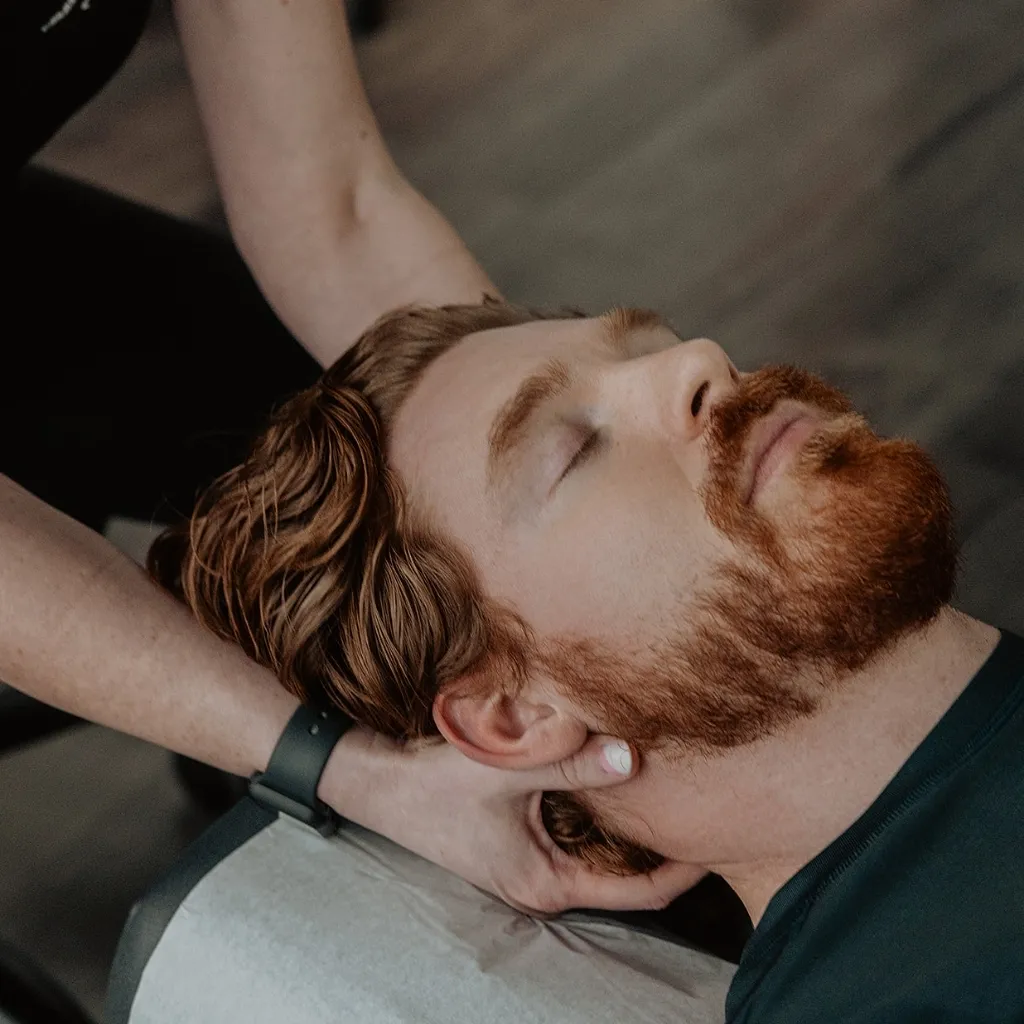
TMJ & Jaw Pain Massage Therapy in Kelowna
Relieve jaw pain & TMJ symptoms with targeted registered massage therapy in Kelowna at Pro Motion Clinic. Experienced care for lasting relief.
Your jaw clicks every time you eat. The pain starts before breakfast and doesn’t quit until you’re asleep. You’ve tried warm compresses, adjusted your pillow, and switched to softer foods, but the ache in your jaw keeps coming back.
TMJ disorder affects the small joint where your lower jaw connects to your skull. When this joint gets irritated or the muscles around it tighten up, even simple things like yawning or biting into an apple can hurt. The good news? You don’t have to just live with it.
Why Your Jaw Hurts
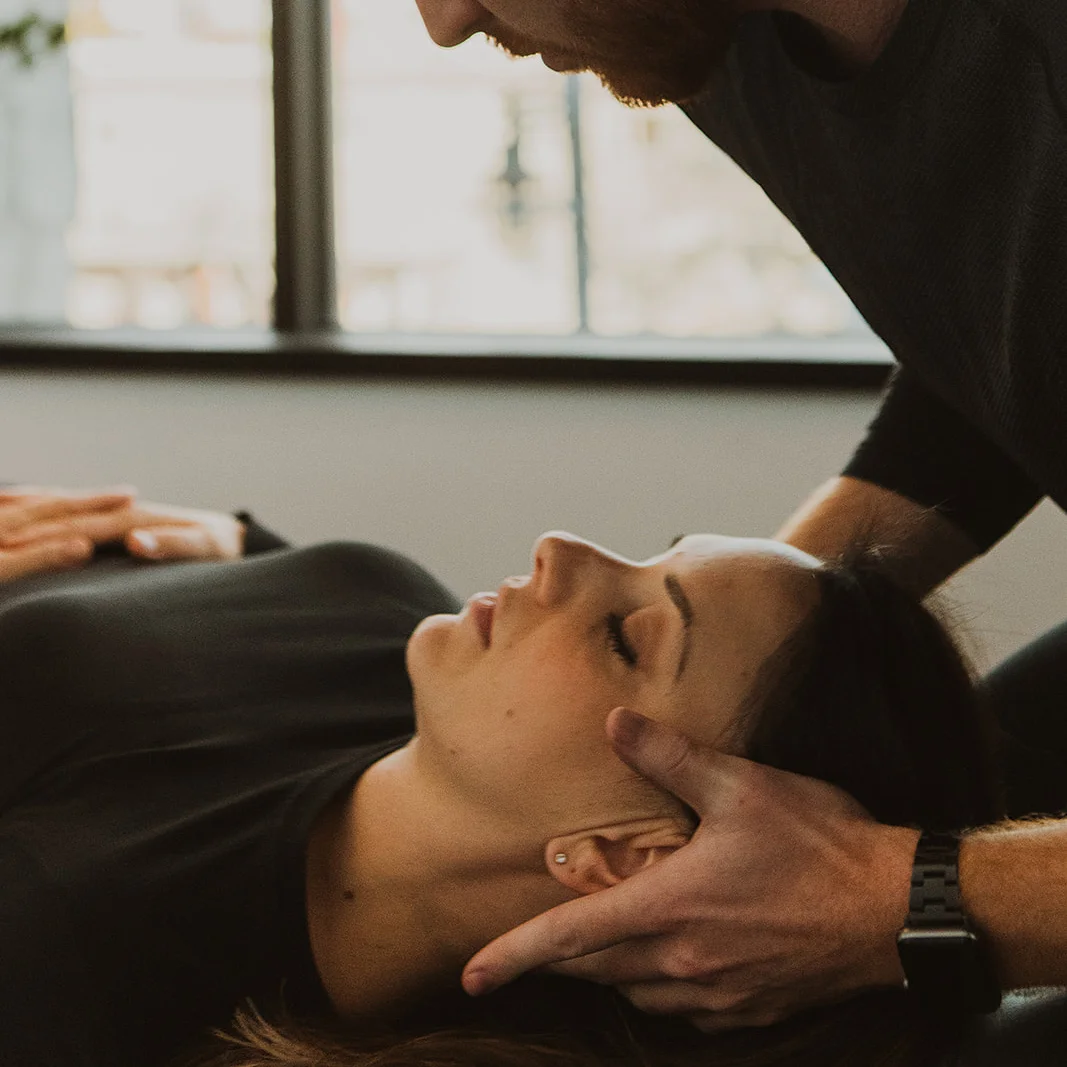
Think about how often you use your jaw in a day. Talking during meetings. Chewing breakfast, lunch, and dinner. Even sleeping with your teeth clenched without realizing it. Your temporomandibular joint works harder than almost any other joint in your body.
When the muscles around your jaw get tight or unbalanced, they pull on the joint. This can happen from stress, grinding your teeth at night, or even just sitting at a desk with your head pushed forward for hours. Over time, these tight muscles create pain that spreads from your jaw to your temples, neck, and shoulders.
The pain doesn’t always stay in one spot. You might feel it when you wake up, or it might get worse as the day goes on. Some people hear clicking or popping sounds when they open their mouth. Others find their jaw locks up or won’t open all the way.
How Registered Massage Therapists Help Your Jaw
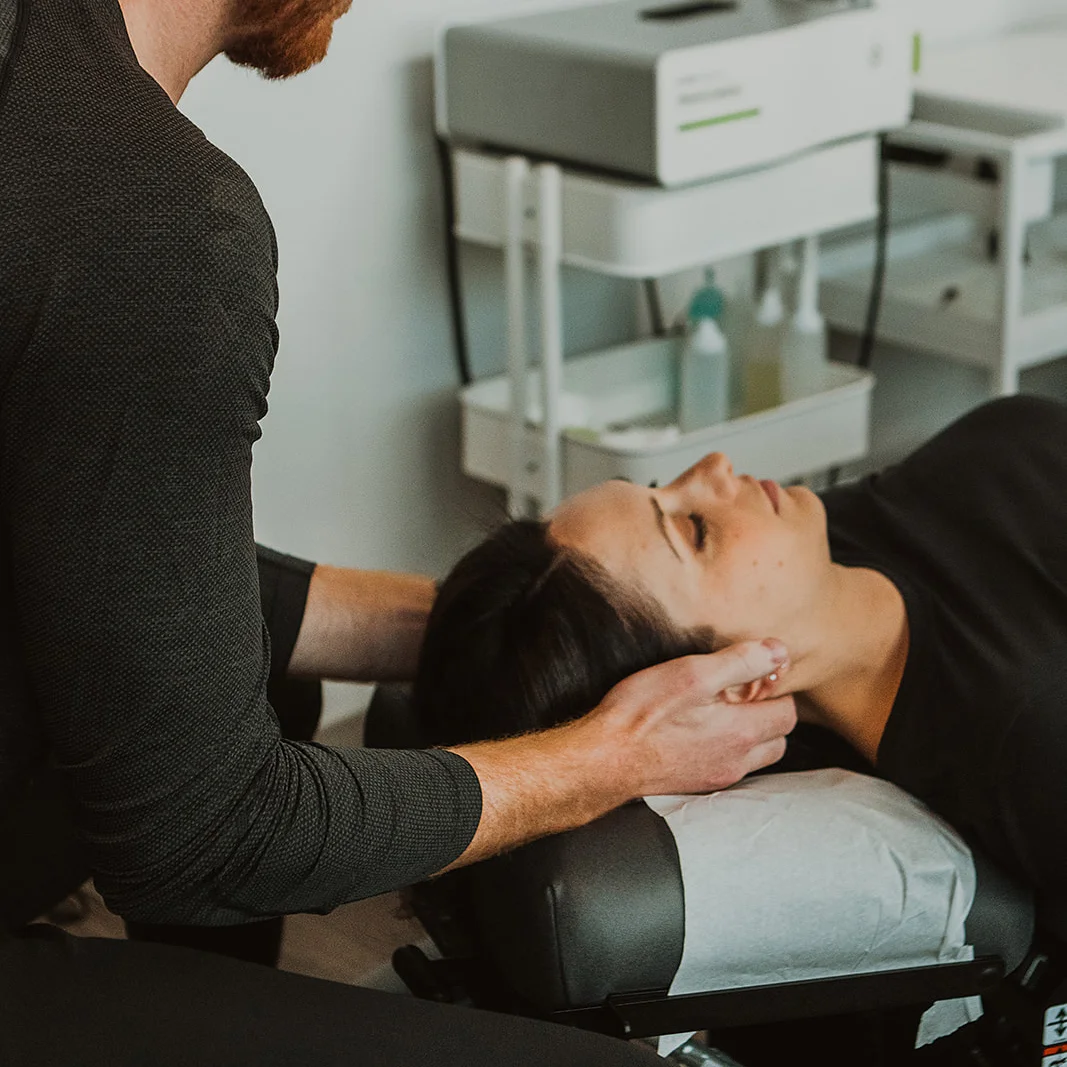
At Pro Motion Clinic in Kelowna, our Registered Massage Therapists work directly with the muscles that control your jaw. These aren’t the big muscles you can see in the mirror. They’re smaller muscles that sit along your jawline, in your temples, and even inside your mouth.
When these muscles stay tight for weeks or months, they develop tender spots called trigger points. These feel like small knots in the muscle. A Registered Massage Therapist uses specific techniques to release these trigger points and help the muscle relax.
Treatment includes work on your masseter muscle, which runs along the outside of your jaw. This muscle does most of the heavy lifting when you chew. When it gets overworked, it can pull your jaw out of alignment and create pain that radiates up to your temples or down to your neck.
Your Registered Massage Therapist will also work on the pterygoid muscles, which sit deeper inside your jaw. These muscles help you move your jaw side to side and forward. When they’re tight, they can make it hard to open your mouth fully or cause clicking sounds in your joint.
The treatment isn’t just about your jaw. Tight muscles in your neck and shoulders can pull on your jaw and make the problem worse. Your Registered Massage Therapist will look at how your whole upper body works together and treat the areas that need attention.
What Happens During Treatment
Your first visit starts with questions about your pain. When does it hurt most? Does it get better or worse with certain activities? Do you wake up with jaw pain or does it build during the day? These details help your Registered Massage Therapist understand what’s driving your symptoms.
Next comes an assessment of how your jaw moves. You’ll open and close your mouth while your therapist watches for uneven movement or restrictions. They’ll feel for tight spots in the muscles around your jaw, temples, neck, and shoulders.
Treatment involves direct work on the muscles. Your Registered Massage Therapist will use their fingers to apply pressure to tight areas and work through the muscle tissue. Some of this work happens inside your mouth, where they can reach the pterygoid muscles directly.
The pressure should feel like “good pain” – the kind that makes you take a deep breath and then relax. It shouldn’t be sharp or make you tense up. Your therapist will check in with you throughout the treatment to make sure the pressure is right.
Between treatments, you’ll get exercises to do at home. These might include gentle jaw stretches or techniques to relax the muscles. Your Registered Massage Therapist will also talk about habits that might be making your jaw pain worse, like clenching your teeth during the day or leaning your chin on your hand while working.
The Four-Part Approach to Jaw Pain
Treatment at Pro Motion Clinic follows a structured approach that addresses all the factors contributing to your jaw pain.
Education comes first. Understanding why your jaw hurts helps you make better choices during your day. Your Registered Massage Therapist will explain how jaw mechanics work and what might be triggering your symptoms.
Exercise rehabilitation teaches you how to move your jaw properly. These aren’t complicated movements – just simple exercises that help retrain the muscles and improve how your jaw opens and closes. You’ll learn what to do when you feel pain starting and how to prevent flare-ups.
Manual therapy is the hands-on treatment that releases tight muscles and restores balance to your jaw. This includes massage techniques, trigger point release, and muscle stretching. Your Registered Massage Therapist adjusts the treatment based on how your body responds.
Specialized treatments may include techniques like Instrument-Assisted Soft Tissue Mobilization (IASTM), which uses tools to release fascial restrictions around your jaw. Some people benefit from dry needling to release deep trigger points in the jaw muscles.
When Jaw Pain Spreads Beyond Your Jaw
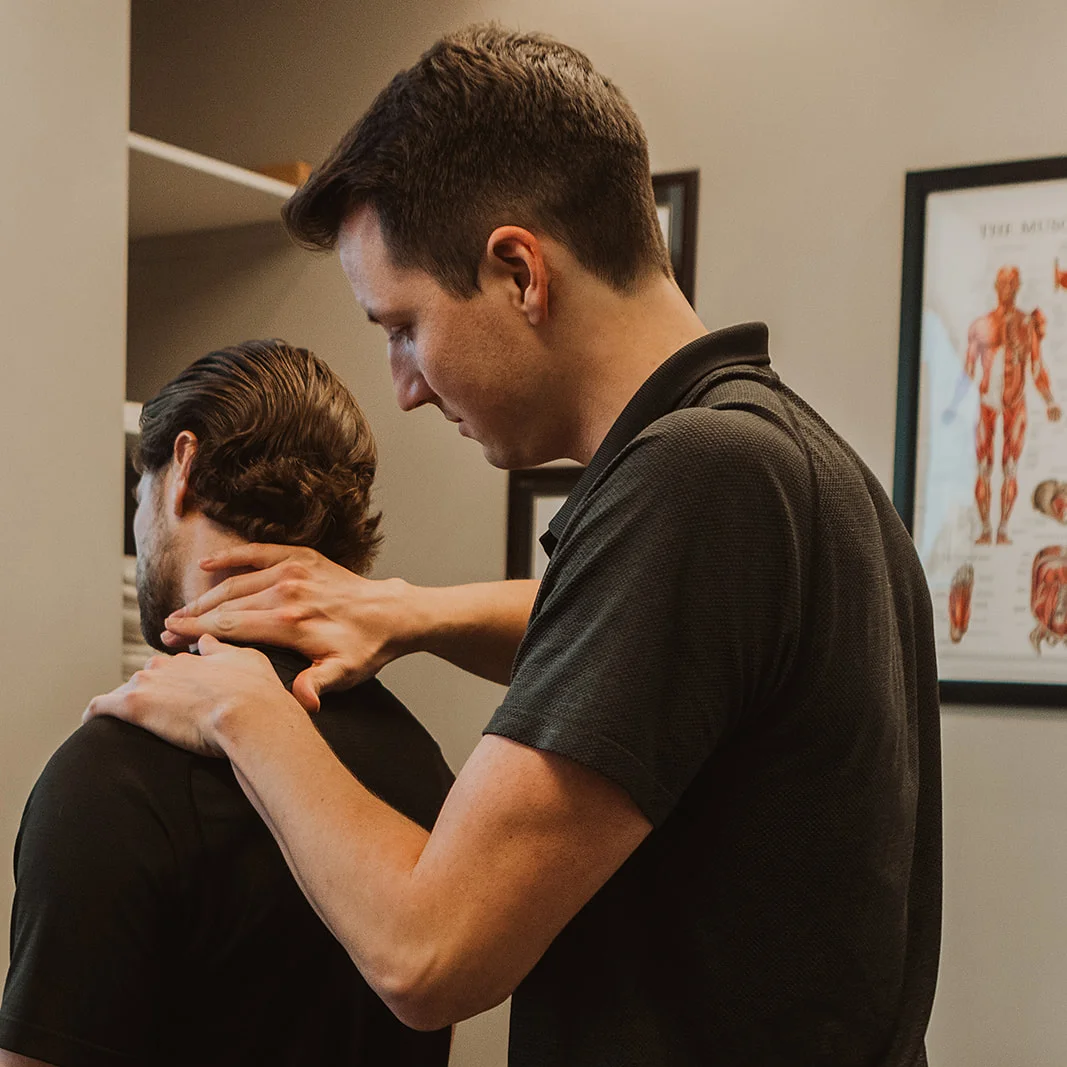
TMJ disorder rarely stays isolated to your jaw. The pain often spreads to create headaches that feel like a tight band across your forehead or temples. These tension headaches can last for hours and make it hard to focus at work.
Your neck might feel stiff on one side, especially if you’re compensating for jaw pain by holding your head in an awkward position. Some people develop shoulder pain from the constant muscle tension that starts in their jaw and travels down.
Ear pain is common with TMJ disorder, even though there’s nothing wrong with your ears. The temporomandibular joint sits right in front of your ear, so inflammation in the joint can feel like an earache. You might also hear ringing or feel pressure in your ears.
Sleep becomes difficult when your jaw hurts. You might wake up with worse pain because you’ve been clenching or grinding your teeth all night without knowing it. Poor sleep then makes the pain worse because your muscles can’t recover properly.
Why Treatment Works Better Than Waiting
Some people hope their jaw pain will go away on its own. Sometimes it does, especially if the pain started from something temporary like eating tough food. But when jaw pain lingers for weeks or months, waiting usually makes it worse.
Chronic muscle tension creates a cycle. Your jaw hurts, so you move it differently. Moving it differently makes other muscles compensate. Those muscles get tired and develop their own trigger points. Now you have pain in multiple areas instead of just one.
Early treatment breaks this cycle before it gets complicated. A few sessions with a Registered Massage Therapist can address the tight muscles and restore normal movement patterns. This prevents the problem from spreading to your neck, shoulders, and creating chronic headaches.
Treatment also gives you tools to manage your jaw pain long-term. You’ll learn exercises that keep your jaw muscles balanced and techniques for handling stress that doesn’t involve clenching your teeth. These skills help prevent future flare-ups.
Finding Help in Kelowna
Living in Kelowna means you have access to the outdoor activities that make this area special. But jaw pain can take the joy out of hiking Knox Mountain or spending a day at Gyro Beach when every bite of your picnic lunch hurts.
Pro Motion Clinic sits in the Pandosy area at #202-3030 Pandosy Street. The clinic brings together Registered Massage Therapists, Chiropractors, Physiotherapists, and Kinesiologists who work as a team to address jaw pain from multiple angles.
If your jaw pain started from a motor vehicle accident, the clinic accepts ICBC claims. This means you can get the treatment you need without worrying about upfront costs while your claim processes.
You can reach the clinic at 236-420-0660 to schedule an appointment or ask questions about TMJ treatment. The team understands that jaw pain affects everything from eating to talking to sleeping, and they’ll work with you to create a treatment plan that fits your schedule and goals.
What Makes Kelowna Jaw Pain Different
People who live active lifestyles often develop jaw pain from unexpected sources. Mountain biking on the trails around City Park means clenching your jaw on technical sections. Skiing Big White in the winter means cold air that makes you tense your jaw muscles.
Even the work culture in Kelowna contributes to jaw problems. Long hours at a computer with your head pushed forward creates neck tension that pulls on your jaw. Stress from work deadlines leads to teeth grinding that wears down your jaw muscles.
Our Registered Massage Therapists see these patterns every day. They know how to connect the dots between your lifestyle and your jaw pain. Treatment addresses not just the tight muscles but also the activities and habits that created the problem in the first place.
Beyond Massage Therapy
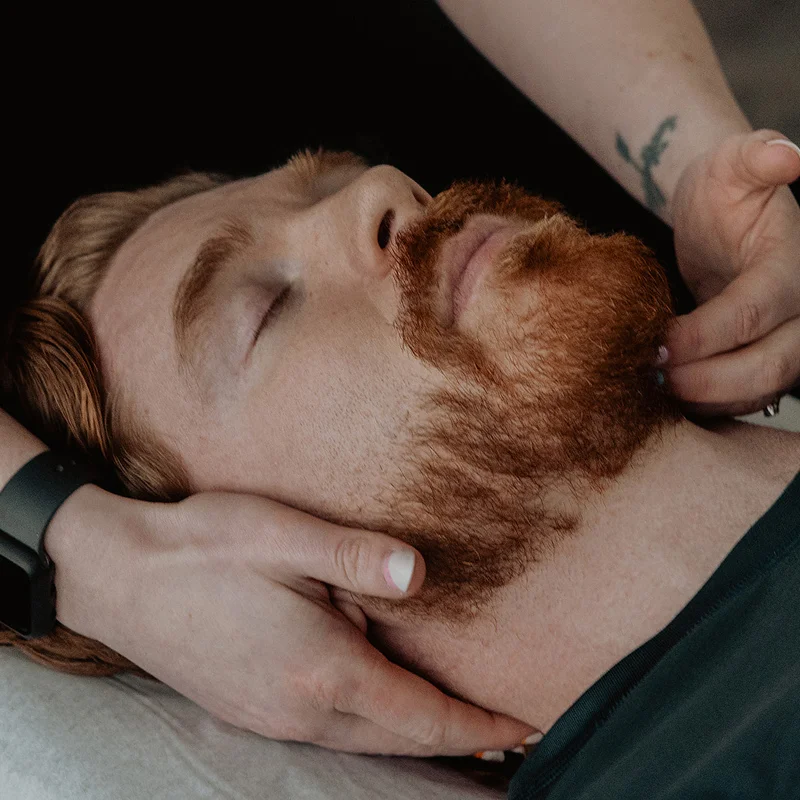
While Registered Massage Therapists provide the core treatment for TMJ disorder at Pro Motion Clinic, your jaw pain might benefit from additional approaches. The clinic’s integrated model means you have access to other practitioners who can support your recovery.
Chiropractors can assess your cervical spine and upper back alignment. Sometimes jaw pain stems from restrictions in your neck that affect how your jaw moves. Adjustments to these areas may help relieve the tension pulling on your jaw muscles.
Kelowna Physiotherapists offer specific exercises and movement retraining for jaw mechanics. They can analyze how you move throughout the day and identify patterns that stress your temporomandibular joint. This assessment helps create a more complete picture of what’s driving your symptoms.
Kinesiologists design exercise programs that address the whole body. Poor posture and weak neck muscles can contribute to jaw pain. Strengthening exercises and posture corrections support the manual therapy work your Registered Massage Therapist provides.
Taking the First Step
Jaw pain doesn’t have to be part of your daily routine. You don’t need to avoid certain foods or wake up with headaches every morning. Treatment can help your jaw move freely again without pain.
Your first step is booking an assessment. During this visit, a Kelowna Registered Massage Therapist will evaluate your jaw, ask about your symptoms, and create a treatment plan specific to your needs. They’ll explain what they find and what techniques might help your particular situation.
Most people notice some improvement after their first few treatments. The tight muscles start to release and the pain becomes less intense. As treatment continues, you’ll learn exercises and strategies that help maintain the improvements between sessions.
The goal isn’t just to reduce your pain. The goal is to help you understand why your jaw hurts and give you the tools to keep it healthy long-term. With the right treatment and a bit of practice with the exercises, you can get back to eating, talking, and enjoying your life in Kelowna without constant jaw pain.
Call Pro Motion Clinic at 236-420-0660 to schedule your TMJ assessment. The team is ready to help you move forward without jaw pain holding you back.
In some cases, chiropractic adjustments in Kelowna can be included to support better joint movement alongside massage therapy.
Real results, real people
Ready to move better in Kelowna?
Book online or call our team — direct billing is available for most extended health plans.