Chiropractic TMJ Treatment Kelowna
Chiropractic TMJ treatment in Kelowna for jaw pain, clicking, headaches & neck tension — adjustments, shockwave & soft-tissue care. Book today.
Your jaw clicks when you eat breakfast. Opening your mouth wide enough to bite into an apple sends a sharp pain up the side of your face. You wake up with headaches that seem to start right where your jaw meets your skull. Sound familiar?
TMJ disorder (also called TMD) affects millions of people, but here’s what most don’t realize: the pain you feel in your jaw might not actually start there. Your jaw, neck, and upper spine work together as one connected system. When something goes wrong in one area, it often shows up as pain somewhere else.
At Pro Motion Clinic in Kelowna, we treat TMJ disorder differently. Instead of just working on your jaw, we look at your whole body to find what’s causing the problem in the first place.
What TMJ Disorder Actually Means
TMJ stands for temporomandibular joint. That’s the hinge that connects your lower jaw to your skull, right in front of each ear. You can feel it move if you put your fingers there and open your mouth.
When people say they have “TMJ,” they usually mean TMJ disorder. This happens when something isn’t working right with that joint or the muscles around it. The medical term is TMD, but most people just call it TMJ.
Think about how much your jaw moves every day. You talk, chew, yawn, laugh, and maybe grind your teeth at night without even knowing it. That’s a lot of work for one joint. Over time, things can get worn down, tight, or out of place.
Why Your Jaw Hurts
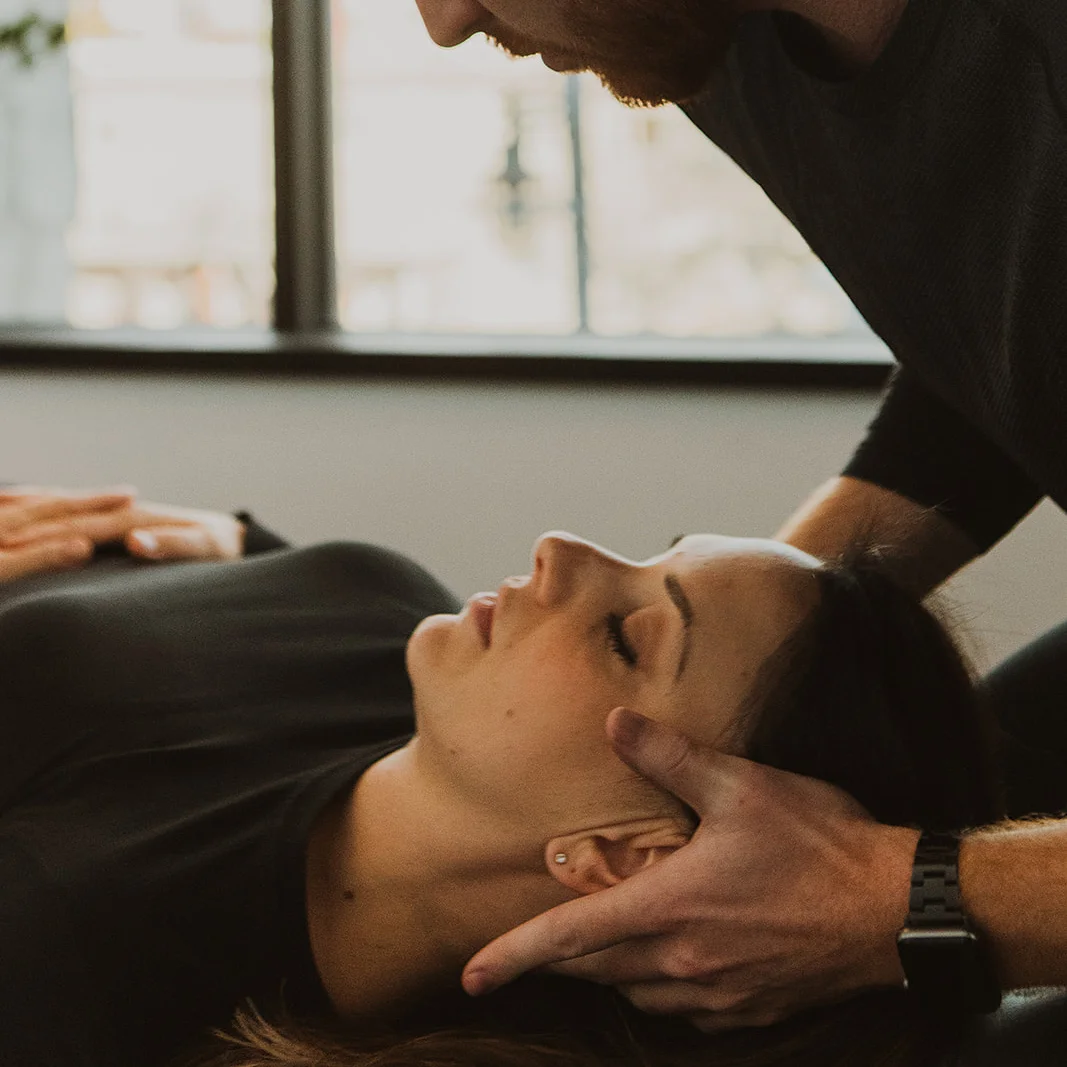
Here’s where it gets interesting. Many people with jaw pain spend months trying different treatments that don’t work because they’re treating the symptom, not the cause.
Your jaw sits at the bottom of a chain that includes your skull, neck, and upper spine. When your neck doesn’t move right, your jaw has to work harder to make up for it. When you sit with your head forward (like when you’re on your phone or computer), the muscles around your jaw get tight and tired.
Maybe you played hockey for years and took hits that affected your neck. Maybe you sit at a desk all day with your head pushed forward. Maybe stress makes you clench your jaw without realizing it. All of these things can lead to TMJ disorder.
The pain might show up as:
- Clicking or popping when you open your mouth
- A jaw that gets stuck or won’t open all the way
- Headaches that start near your temples
- Pain in your ears or ringing sounds
- Neck and shoulder pain that won’t go away
- Trouble chewing or biting down on food
For some people, the pain comes and goes. For others, it’s there every single day.
How We Treat TMJ Disorder at Pro Motion Clinic
Let’s say you’re training for the Okanagan Marathon and your jaw starts hurting out of nowhere. You can barely eat solid food, and your training is suffering because the pain makes it hard to focus.
When you come to Pro Motion Clinic, we don’t just look at your jaw. We check how your neck moves, how your posture looks, and whether you have tight muscles in areas you might not expect. Often, we find that fixing the real problem means working on more than just where it hurts.
Our approach has four parts:
Patient Education
We’ll show you how your jaw connects to your neck and spine. We’ll explain which movements or habits might be making things worse. And we’ll help you spot the early warning signs so you can catch problems before they get bad.
Manual Therapy
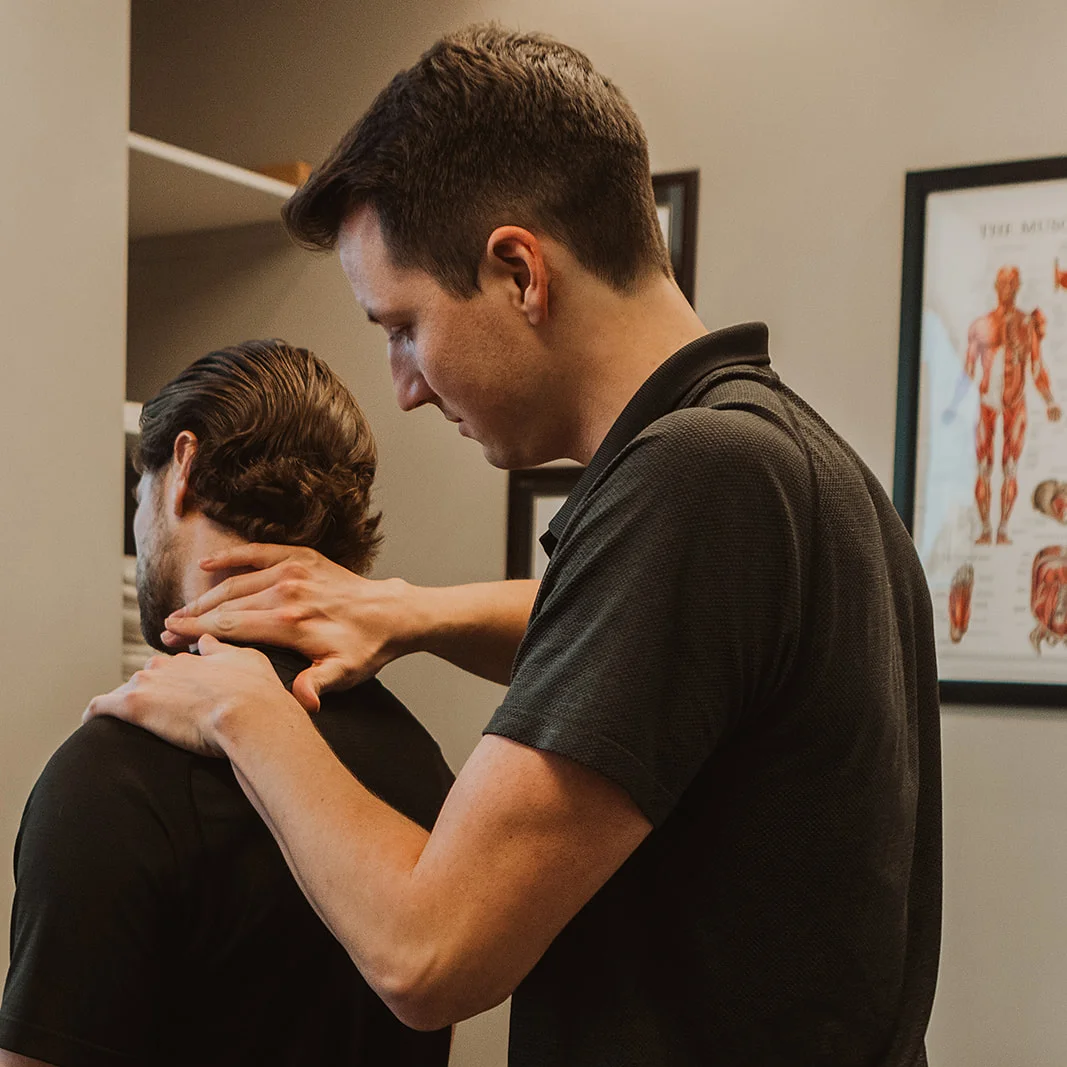
This is hands-on work that gets right to the source of the problem. Our Chiropractors in Kelowna know how to adjust the jaw joint itself and the joints in your neck that affect how your jaw moves.
Sometimes tight muscles in your face, neck, or shoulders are pulling your jaw out of place. We use soft tissue work to release those tight spots and get things moving again. For the jaw muscles (like the masseter and temporalis), we use specific techniques that may help reduce tension without causing more pain.
The upper part of your neck (the atlas and axis vertebrae) has a direct connection to how your jaw functions. When these joints don’t move right, your jaw often pays the price. Adjusting these areas may help your jaw work better even though we’re not touching it directly.
Shockwave Therapy
For stubborn cases that don’t respond to other treatments, we use Shockwave Therapy. This treatment sends acoustic waves deep into the tissue to jump-start healing in areas that have been painful for a long time.
Shockwave may help reduce pain and improve how your jaw moves. It’s not surgery, doesn’t require medications, and many people feel better after just a few sessions. We often combine it with manual therapy and exercises for better results.
Exercise Rehabilitation
These aren’t complicated. Simple movements done correctly can make a big difference. You might do gentle jaw stretches, neck strengthening exercises, or movements that improve your posture. The goal is to fix the muscle imbalances and movement patterns that led to the problem in the first place.
If you’re someone who bikes the Mission Creek Greenway every weekend or hikes Knox Mountain regularly, we want you back to those activities as soon as possible. The exercises we give you fit into your life and help you stay active while you heal.
What Makes TMJ Disorder Different in Active People
If you’re active, TMJ disorder can be extra frustrating. You’re used to pushing through pain and staying busy. But jaw pain doesn’t work that way. You can’t just “push through” when your jaw won’t open properly.
Active people often have TMJ issues related to:
- Impact sports that affect the head and neck
- Clenching during hard workouts or races
- Poor breathing patterns during exercise
Tension from stress and competitionThe good news is that active people often respond well to treatment because their bodies are used to moving and adapting. Once we fix the underlying problem, recovery can happen fast.
What to Expect During Your First Visit
You come to our clinic at 3030 Pandosy Street in Kelowna. (We’re in Pandosy Village, so you can grab a coffee after your appointment.)
During your first visit, we spend time understanding your story. When did the pain start? What makes it better or worse? What are you training for or what activities do you want to get back to?
We’ll watch how you move your jaw and neck. We’ll check if one side moves differently than the other. We’ll test the muscles around your jaw and upper spine to see which ones are tight or weak.
Then we’ll explain what we found and what we think is causing the problem. We don’t use confusing medical terms. We show you on models or diagrams exactly what’s happening and why.
Treatment might start that same day. Many people notice their jaw feels different even after the first session. We’ll also give you things to do at home so you’re not waiting a week until your next visit to start feeling better.
Combining Treatments for Better Results
TMJ disorder often needs more than one type of treatment. At Pro Motion Clinic, we work as a team. Your Chiropractor might work with one of our Kelowna Registered Massage Therapists or Kelowna Kinesiologists to give you the care that works for your specific situation.
Maybe you need deep tissue work on tight neck muscles plus specific jaw adjustments. Maybe Shockwave Therapy combined with exercises gives you the results you want. We adjust your treatment plan as you improve.
Life After TMJ Treatment
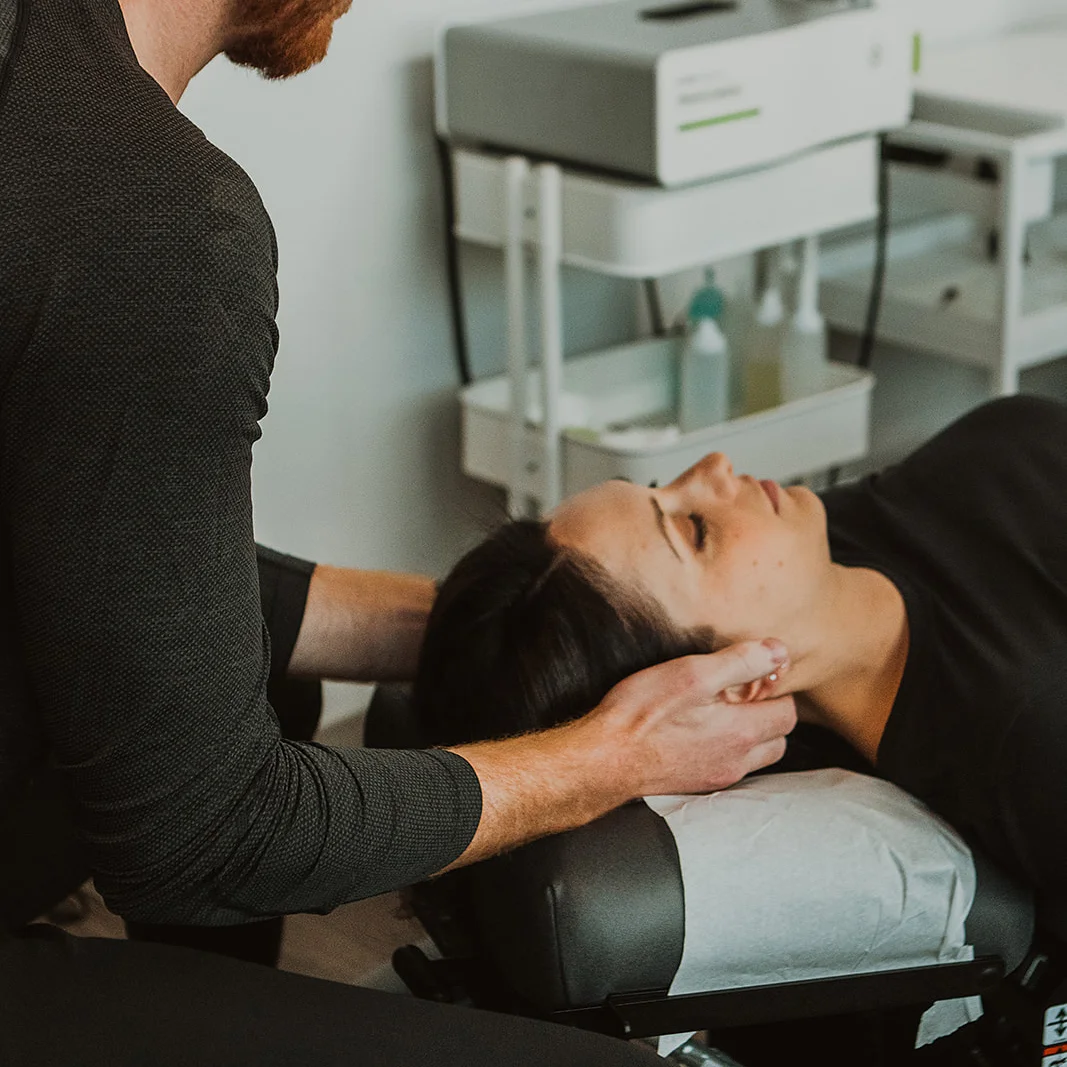
Imagine being able to bite into a burger at your favourite spot near City Park without thinking twice. Imagine waking up without a headache or getting through your workday without jaw pain.
That’s the goal. Not just less pain, but getting back to normal life where you don’t have to think about your jaw every time you eat or talk.
For most people, TMJ disorder can get better with the right treatment. Some people feel better in a few weeks. Others with long-term pain might need more time. But improvement is possible when you address the real cause instead of just covering up symptoms.
Making the Connection Between Your Body and Your Jaw
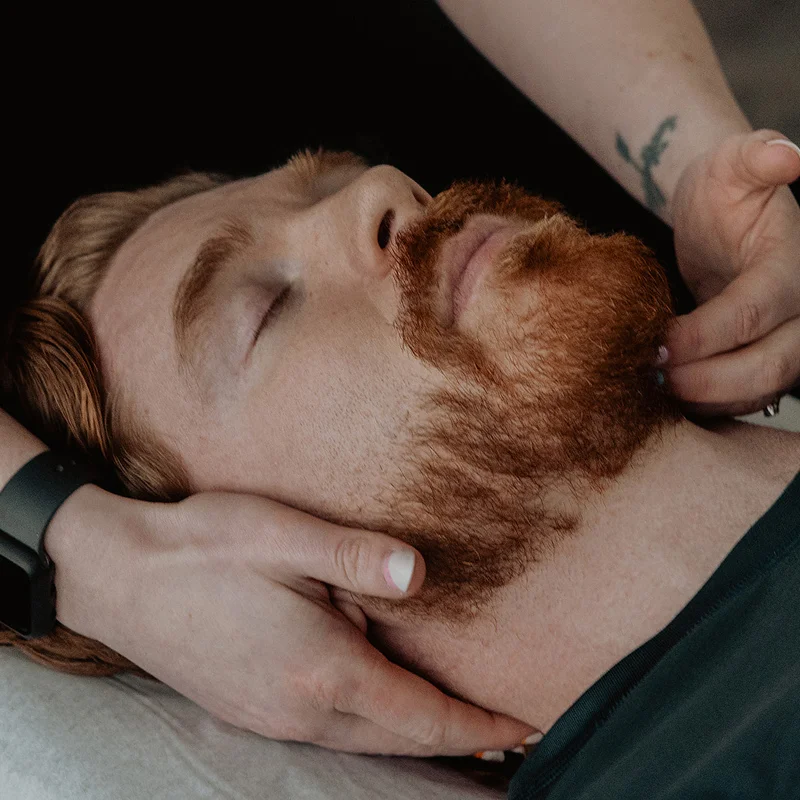
Here’s something most people don’t realize: your posture matters more than you think. When you sit at your desk with your head pushed forward, the muscles at the front of your neck get tight. This pulls on the muscles that control your jaw. Over time, this can lead to TMJ disorder.
If you spend your days working at a computer (like so many people in Kelowna’s tech sector), your neck and jaw are probably working harder than they should. The further forward your head sits, the more strain on your TMJ.
We help you fix these patterns. Small changes in how you sit, stand, and move can take massive pressure off your jaw.
Taking the First Step
TMJ disorder doesn’t usually get better on its own. The longer you wait, the more your body adapts to the problem with other compensations that cause new issues.
If you’re dealing with jaw pain, clicking, or headaches that won’t quit, it might be time to get help. You don’t have to keep living with pain that affects how you eat, sleep, and enjoy your life.
At Pro Motion Clinic, we focus on keeping active people performing at their best. Whether you’re a weekend warrior hitting Big White every winter or someone who just wants to hike Gyro Beach without pain, we want to help you move better.
Call us at (236) 420-0660 or book online at promotionclinic.com. We’re open Monday through Saturday, and we’re located right in the heart of Pandosy Village at #202-3030 Pandosy Street. We accept ICBC claims and offer direct billing to make your care as easy as possible.
Your jaw pain might have many causes, but with the right approach, recovery is possible. Let’s figure out what’s actually causing your pain and get you back to doing what you love.
Real results, real people
Ready to move better in Kelowna?
Book online or call our team — direct billing is available for most extended health plans.