Therapeutic Taping in Kelowna
Support muscles & joints with therapeutic taping in Kelowna. Expert chiropractic care at Pro Motion Clinic – (236) 420-0660.
You know that feeling when your shoulder clicks every time you reach up? Or when your knee decides to remind you it exists during your morning run? Your body talks to you. Sometimes it whispers. Sometimes it shouts. And when it does, taping might be exactly what you need to get back to doing what you love.
At Pro Motion Clinic in Kelowna, we use taping as part of a bigger plan to keep you moving. Not as a magic fix. Not as the only answer. But as one tool that works alongside everything else we do.
What Taping Actually Does
Think about when you stub your toe. What’s the first thing you do? You grab it. That pressure changes how your body reads the pain signal. Taping works on a similar idea.
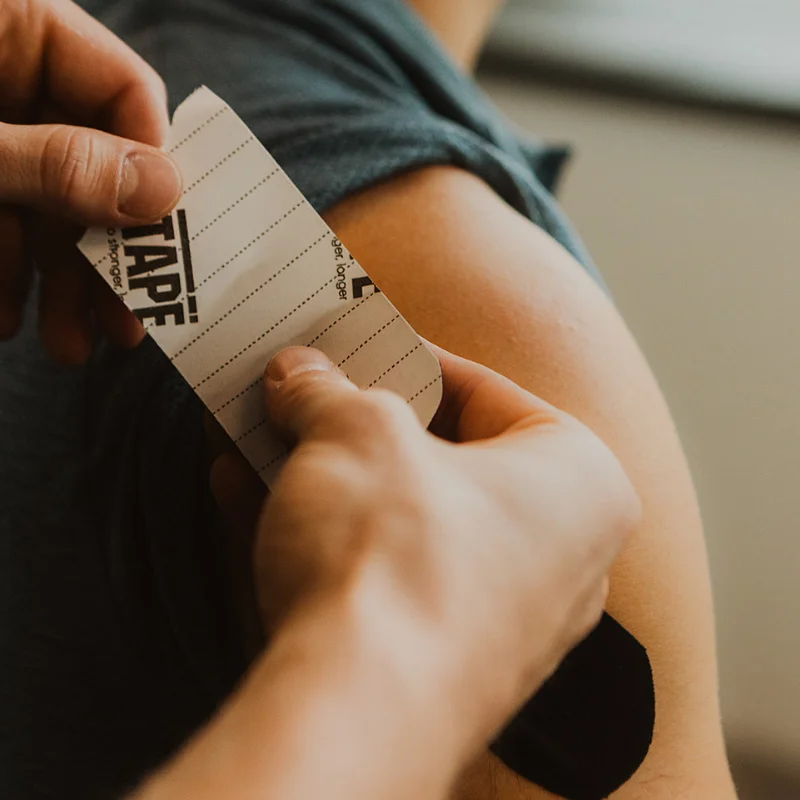
The tape we use is stretchy—about as stretchy as your skin. Whether we’re using K Tape, RockTape, or another professional-grade brand, the basic principle is the same. When we apply it over a muscle or joint, it lifts your skin just a tiny bit. This creates a small space between your skin and the tissue underneath. That space matters. It changes the messages your nerves send to your brain. It can help move fluid that’s stuck around an injury. It gives your body different information to work with.
Your skin has sensors everywhere. These sensors tell your brain where your body is and what it’s doing. When we add tape, we’re adding new information to that system. Your brain gets extra feedback about that taped area. This can help reduce pain, support weak spots, and remind muscles to do their job.
The tape sticks around too. Unlike regular athletic tape that comes off after practice, this stuff stays put. You can shower with it. You can sweat in it. It usually lasts three to five days. That means your body gets that extra support and those helpful signals around the clock.
Who Needs Taping in Kelowna
Athletes love taping. Runners use it for their knees. Volleyball players tape their shoulders. Hockey players tape everything. But you don’t need to be training for anything to benefit from taping.
Maybe you sit at a desk all day and your lower back is tired of it. Maybe you’re carrying your toddler on one hip and your shoulder is complaining. Maybe you twisted your ankle stepping off a curb in downtown Kelowna and now it feels wobbly. Maybe you’re training for the Apple Triathlon and need that extra edge.
Taping can help with:
- Shoulder pain that shows up when you reach overhead
- Lower back discomfort from sitting too long
- Neck tension from poor desk posture
- Plantar fasciitis that makes your first steps in the morning painful
- Knee issues from hiking the trails around Kelowna
- Ankle instability after a sprain
- Muscle soreness after hard workouts
Here’s the thing: taping works best when it’s part of a plan. At Pro Motion Clinic, we don’t just slap some tape on you and send you home. We figure out why you’re hurting in the first place. Then we build a treatment approach that makes sense for your body and your life.
How We Use Taping at Pro Motion
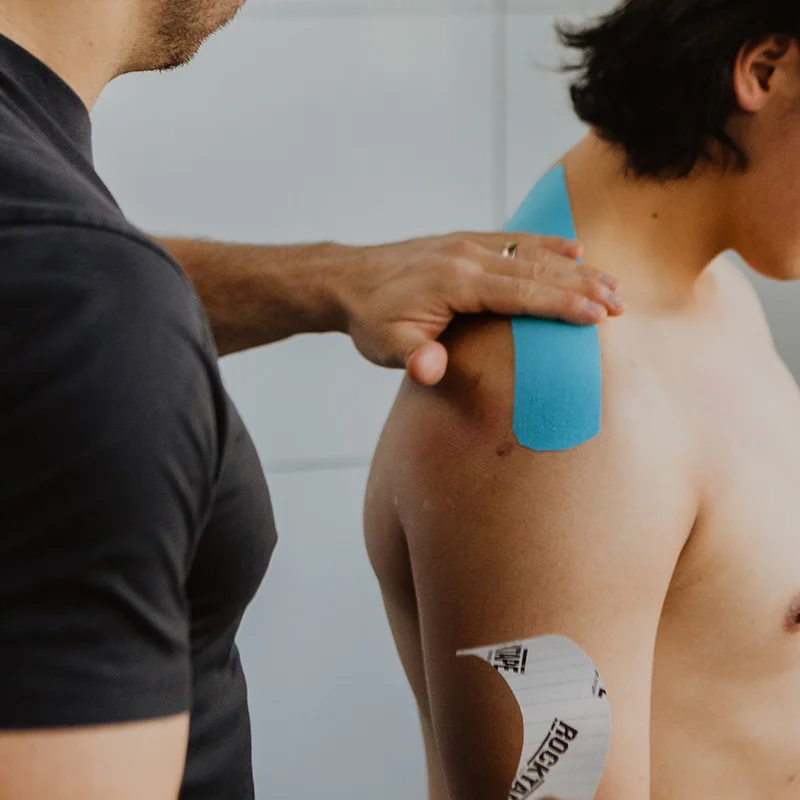
The team at Pro Motion combines taping with other treatments. This is how we help active people in Kelowna stay active.
The Assessment Comes First
Before any tape touches your skin, we need to understand what’s going on. We look at how you move. We find where things are tight or weak. We figure out if your pain is coming from where it hurts or from somewhere else that’s not pulling its weight.
This matters because taping the wrong spot does nothing. If your knee hurts because your hip is weak, taping your knee might feel good for a day. But it won’t fix the real problem. We look at the whole picture.
Taping Meets Manual Therapy
Manual therapy is our hands-on work. Adjustments. Soft tissue work. Joint mobilization. When we combine this with taping, good things happen.
The manual therapy gets your tissues moving better. It reduces inflammation. It helps your joints work the way they should. Then the taping helps maintain those changes. It keeps giving your body that helpful feedback even after you leave our clinic on Pandosy Street.
Exercise Rehab Makes It Stick
Tape is not a substitute for doing the work. You still need to strengthen what’s weak. You still need to stretch what’s tight. You still need to teach your body new patterns.
But taping can make that exercise rehab easier. It can reduce pain while you’re rebuilding strength. It can help you feel where a muscle should be working when it’s been lazy. It gives you confidence to move when movement feels scary.
We give you specific exercises to do at home. The tape supports you while you do them. Then as you get stronger, you need the tape less. That’s the goal.
K Tape, RockTape, and Other Options
Walk into any sports store and you’ll see shelves of colorful tape. K Tape. RockTape. Kinesio Tex. Mueller. SpiderTech. The list goes on. So what’s the difference?
K Tape (KT Tape)
The adhesive on K Tape is strong. It’s made to last through tough workouts and multiple showers. Athletes like it because it stays put during competition. At Pro Motion, we use K Tape when we want tape that’s going to handle whatever you throw at it—literally. Training for an endurance race? Doing CrossFit at one of Kelowna’s gyms? K Tape holds up.
The cotton-nylon blend gives it that skin-like stretch. It moves with you. It doesn’t restrict your range of motion. And it comes off relatively easy when you’re ready to remove it.
RockTape
This extra stretch and grip makes RockTape popular with people who sweat a lot or who need tape to last through extreme conditions. Think mountain bikers hitting the gnarly trails. Swimmers. People training in hot yoga studios. RockTape doesn’t give up easily.
We reach for RockTape at Pro Motion when we’re working with athletes who need maximum durability. Or when we’re taping an area that moves a lot and needs extra support. The downside? That strong adhesive can be tough on sensitive skin. And it can be trickier to remove.
RockTape also comes in different patterns and designs. Some people like the look. It’s become part of the athletic aesthetic.
How We Choose Which Tape to Use
For sensitive skin, we might use a gentler adhesive tape. For heavy sweaters or water activities, RockTape makes sense. For general use and easy home reapplication, K Tape works great. For specific therapeutic applications where we need precise control, we might use the original Kinesio Tex tape.
The brand matters less than the technique. How we apply it. Where we place it. How much stretch we use. The pattern we create. That’s what makes the difference. A practitioner who knows what they’re doing can get good results with any quality tape brand.
That said, cheap tape from random online sellers doesn’t cut it. The adhesive fails. The elasticity is wrong. The material doesn’t breathe. We use professional-grade tape because it works better and lasts longer.
Colours Don't Change Function
Quick note: some people think different tape colours do different things. Red for activation. Blue for calming. Black for power. That’s marketing, not science. The colour doesn’t change how the tape works. Pick whatever colour makes you happy. Or pick what matches your workout gear. It’s all the same under the surface.
Different Types of Taping We Do
Not all taping looks the same. The way we cut and apply the tape depends on what we’re trying to help.
Muscle Support Taping
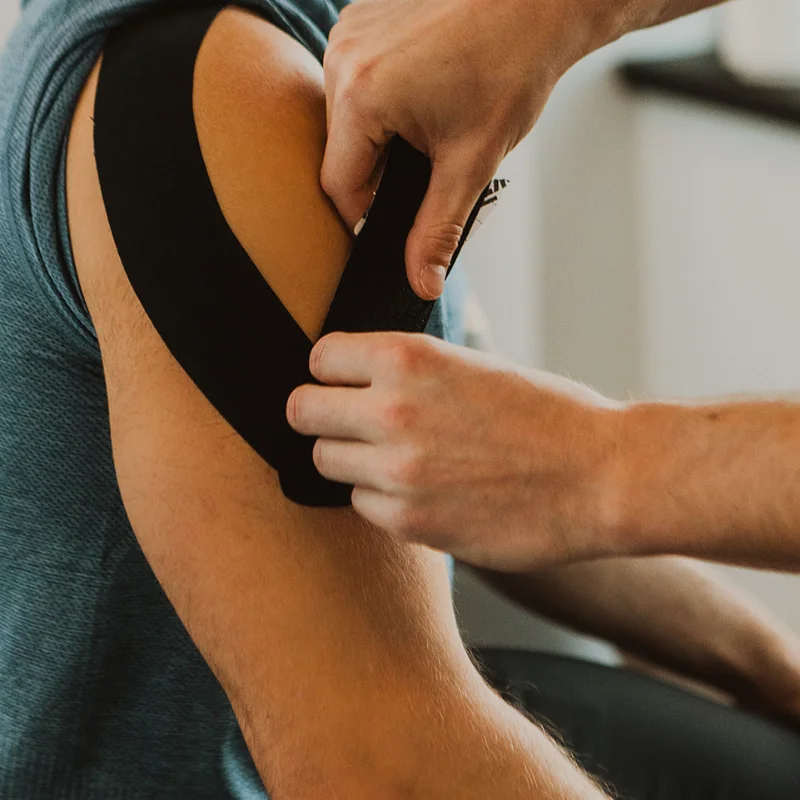
You might see this on runners who tape their calves. Or on people with shoulder issues who need their rotator cuff to work better. The tape follows the line of the muscle fibres. It’s usually applied with a bit of stretch to create that lifting effect on the skin.
Joint Stability Taping
This type of taping provides feedback to your brain about joint position. It doesn’t lock the joint in place like a brace would. Instead, it improves something called proprioception—your brain’s sense of where your body parts are in space. Better proprioception means better control.
Lymphatic Taping
The tape is applied in a fan shape with less stretch than muscle taping. It creates channels under the skin that guide fluid toward lymph nodes. This can help reduce swelling faster after sprains, strains, or surgery.
Postural Correction Taping
Taping can help pull your shoulders back. It reminds you to sit up. It makes slouching uncomfortable. But here’s the real talk: tape alone won’t fix your posture. You need to strengthen your back muscles and stretch your chest. The tape just helps you feel what good posture should be like while you build that strength.
Taping Plus Shockwave Therapy
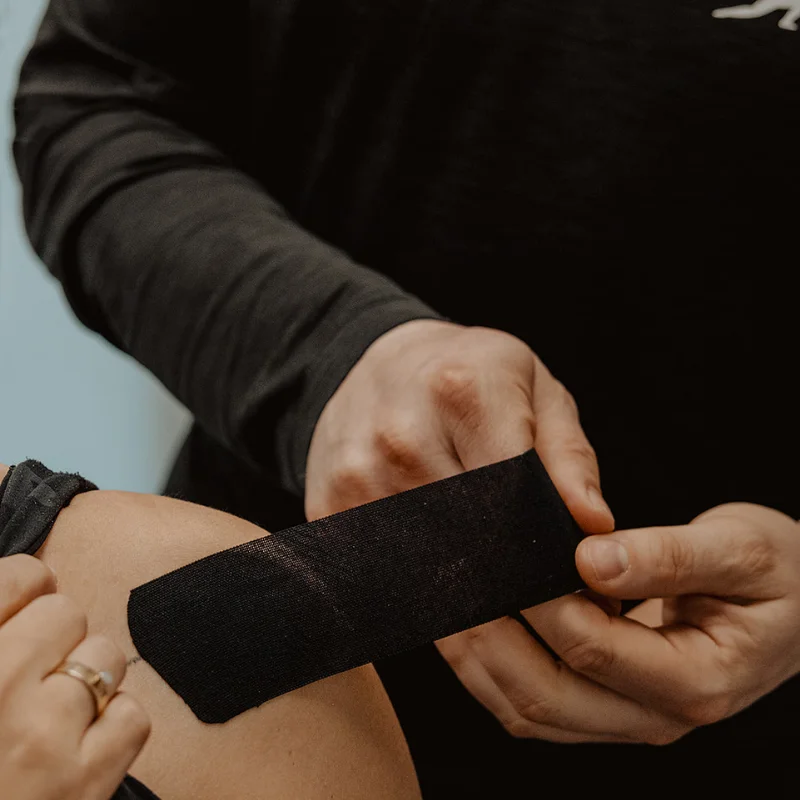
At Pro Motion, we often combine taping with Shockwave Therapy. This combination can speed up healing for stubborn issues.
Shockwave Therapy in Kelowna uses sound waves to increase blood flow and break up scar tissue. It helps with chronic pain that hasn’t responded to other treatments. When we add taping after a Shockwave session, the tape helps maintain the improved tissue quality. It supports the area while your body does its healing work.
This combo works well for:
- Plantar fasciitis that’s been around too long
- Tennis elbow from gripping your bike handlebars on Kettle Valley trails
- Achilles tendon pain
- Chronic shoulder issues
- Persistent knee pain
What to Expect During Your Taping Visit
Your first visit to Pro Motion Clinic starts with a conversation. We want to know what hurts, what you can’t do anymore, and what you want to get back to doing. Maybe it’s playing with your kids at Gyro Beach. Maybe it’s getting back on the slopes at Big White. Maybe it’s just sleeping through the night without pain.
Then comes the movement assessment. We watch you move. We test your strength. We feel where things are tight. This takes time. We don’t rush it. Our team believes in figuring out the real problem before jumping to solutions.
If taping makes sense for your situation, we’ll apply it during that first visit or during a follow-up. The tape application itself is quick—usually just a few minutes. But the assessment and treatment that go with it take longer.
We’ll show you what the tape is doing. We’ll explain why we’re putting it where we are. We want you to understand your body and your treatment. Education is a big part of what we do at Pro Motion.
You’ll leave with instructions about the tape. How long to leave it on. What to watch for. When to come back. And you’ll have exercises to do at home. Remember, the tape is just one piece.
The Pro Motion Difference
Lots of places in Kelowna offer taping. So why choose Pro Motion Clinic?
We look at the whole picture. Your pain isn’t just about one spot. It’s about how your whole body moves. How you sit. How you sleep. What you do for work. What you do for fun. We take all of that into account.
We combine approaches. Chiropractic care in Kelowna. Manual therapy. Taping. Exercise rehab. Shockwave Therapy. Registered Massage Therapy. Kinesiology Treatment. We use what your body needs, not just what we happen to offer.
We treat athletes like athletes. Pro Motion was founded with a focus on keeping active individuals performing at their best. Our team gets what it means to need your body to perform. We’re not here to tell you to stop doing what you love. We’re here to help you keep doing it.
We’re located in Kelowna at 3030 Pandosy Street. Easy to find. Easy to get to. Open Monday through Saturday with appointment times that fit real life.
When Taping Might Not Be Right
We need to be honest: taping isn’t for everyone and it isn’t for everything.
If you have open wounds, we can’t tape over them. If you have certain skin conditions or allergies to adhesive, taping won’t work for you. If you have active cancer or blood clots, we need to use different approaches.
And here’s the bigger truth: taping by itself won’t fix anything. If you’re not willing to do the exercise rehab, the taping will only provide temporary relief. If the problem is structural and needs medical intervention, tape isn’t the answer. We’ll tell you if we think you need to see a different type of doctor.
Taping works best when it’s part of a bigger treatment plan. When you’re doing your exercises. When you’re getting your adjustments or manual therapy. When you’re making changes to the things that caused the problem in the first place.
Getting Started with Taping in Kelowna
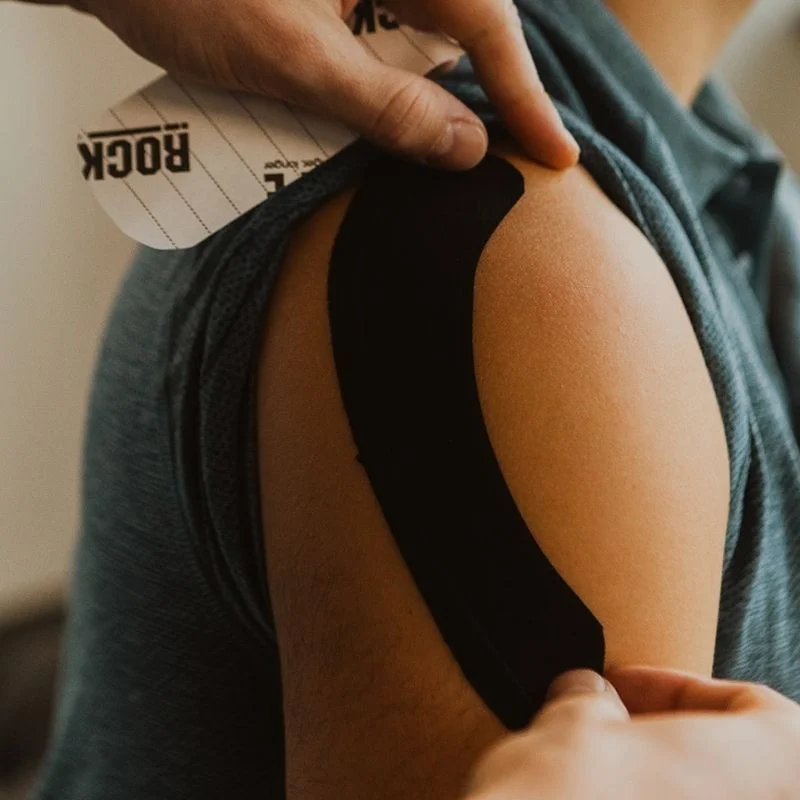
If you’re dealing with pain or injury and you think taping might help, the first step is simple: book an assessment at Pro Motion Clinic.
Call us at (236) 420-0660. Talk to our team. Tell them what’s going on. They’ll get you scheduled with the right practitioner—whether that’s one of our Kelowna Chiropractors or one of our Kelowna Physiotherapists.
Your initial visit includes a full assessment. We need to understand your body, your pain, and your goals. From there, we’ll build a treatment plan that might include taping along with other approaches.
You can also book online at promotionclinic.com. Our online booking system makes it easy to find a time that works for your schedule.
We’re at #202-3030 Pandosy Street in Kelowna. There’s parking available. The clinic is modern and comfortable. No stuffy medical office vibes here. We want you to actually look forward to coming in.
More Than Just Tape
At the end of the day, taping is a tool. A good tool. A helpful tool. But still just a tool.
What makes Pro Motion different is that we use that tool as part of something bigger. We combine patient education, exercise rehab, manual therapy, and technologies like Shockwave Therapy to keep active people performing at their best.
Whether you’re training for your next race, recovering from an injury, or just trying to make it through your work day without pain, we can help. We see your body as a system. We treat the cause, not just the symptoms. And we give you the knowledge and tools to keep yourself healthy.
Taping in Kelowna isn’t just about colorful strips on your skin. It’s about giving your body the support it needs while you build real, lasting strength and function. It’s about getting back to the trails, the gym, the field, or whatever place makes you feel most alive.
Ready to see if taping can help you? Reach out to Pro Motion Clinic. Let’s figure out what’s really going on and build a plan to get you back to doing what you love.
ICBC Claims Accepted
If you’ve been in a car accident in Kelowna, we work with ICBC claims. Motor vehicle injuries often benefit from taping as part of a treatment plan. Whether you’re dealing with whiplash, shoulder pain from impact, or other collision-related injuries, taping can support your recovery while we address the underlying issues. We handle the paperwork and billing directly with ICBC so you can focus on getting better. Our team has experience working with ICBC patients and understands the specific requirements for claims. Give us a call to discuss your situation and how we can help.
Your body wants to move well. Sometimes it just needs a little help getting there. That’s where we come in.
Real results, real people
Ready to move better in Kelowna?
Book online or call our team — direct billing is available for most extended health plans.