VALD Testing Kelowna
Improve performance & reduce injury risk with professional VALD force-plate testing in Kelowna at Pro Motion Clinic. Call (236) 420-0660.
You’re training hard for ski season at Big White. Your knee feels okay, but something’s off when you’re loading the chairlift. Or maybe you’re back playing rec hockey at MNP Place after an ankle sprain, and you can’t quite plant your foot the same way. Everything looks fine. But something doesn’t feel right.
This is where guesswork ends and data begins. At Pro Motion Clinic in Kelowna’s Pandosy area, we use VALD testing technology to see what’s actually happening with your body. Not what we think is happening. Not what you hope is happening. What’s actually happening when you move, jump, balance, and load your muscles.
What Is VALD Testing?
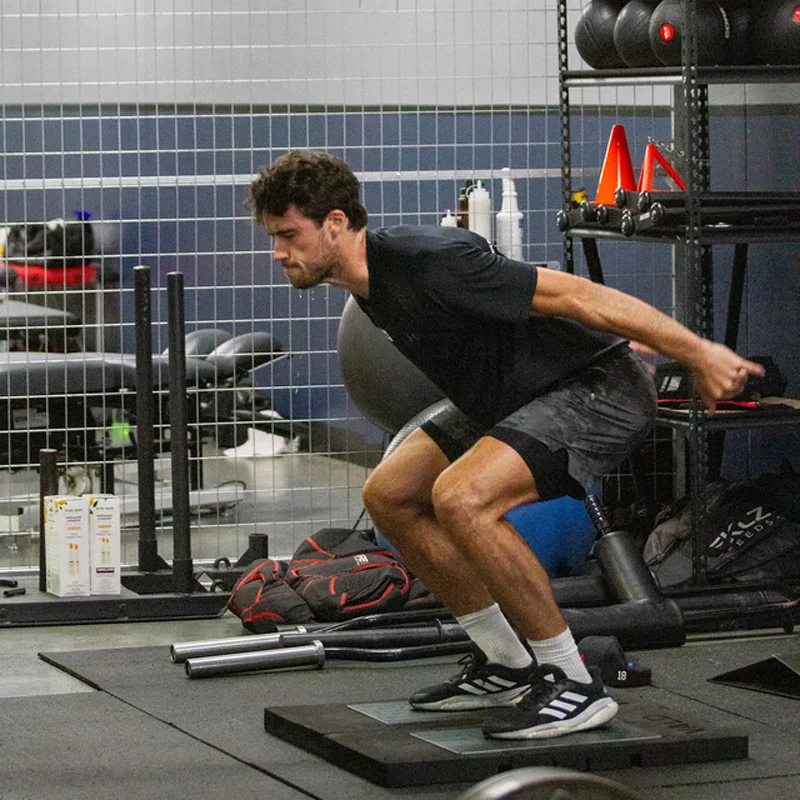
VALD testing uses force plates and specialised equipment to measure how your body produces force, controls movement, and handles balance. Think of it like a detailed report card for your muscles and joints.
The force plate looks like a regular platform you’d stand on. But underneath, it’s recording hundreds of data points about how you move. When you jump, it measures how much power you generate. When you land, it shows how well you control that force. When you balance on one leg, it reveals which side of your body works harder.
This technology can spot problems your body has learned to hide. Your brain is smart. It compensates when something hurts or feels weak. You shift your weight without thinking about it. You favor your good leg. You adjust your posture to avoid pain. These compensations work for a while. But over time, they create new problems.
VALD testing catches these patterns before they become injuries.
How VALD Testing Works at Our Kelowna Clinic

When you come in for VALD testing, you’re not lying on a table getting poked and prodded. You’re moving. Jumping. Balancing. Doing the things your body actually needs to do.
We start with a conversation. What activities matter to you? Where do you feel limited? What are you training for? Then we design a testing protocol that matches your goals.
The force plate measures several key areas:
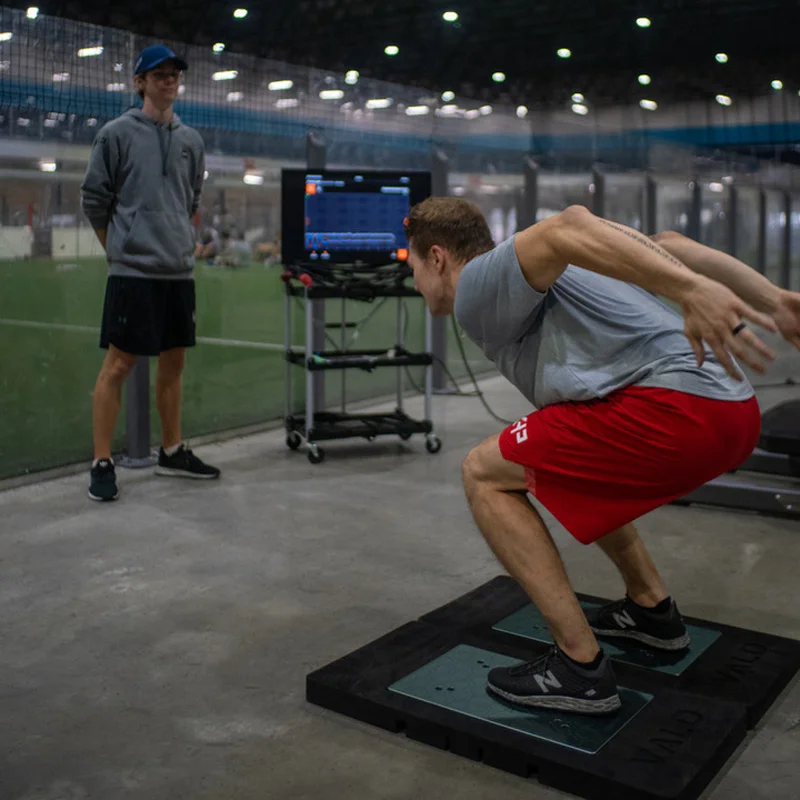
Jump Testing: You perform different types of jumps while the force plate measures how much power you generate, how quickly you can produce that power, and how evenly you’re loading each leg. This data shows us if one side of your body is doing more work than it should.
Balance Assessment: Standing on one leg seems simple until you’re doing it on a force plate that measures every tiny shift and adjustment. This test reveals how well your nervous system controls your body and whether one side is more stable than the other.
Strength Testing: By pushing against fixed points or performing specific movements, we can measure how much force your muscles can produce. This helps us identify weak links that might be setting you up for injury.
Landing Mechanics: How you land from a jump tells us a lot about injury risk. The force plate measures impact forces and shows us if you’re absorbing shock evenly or if one leg is taking too much load.
Why Numbers Matter More Than You Think
Imagine asking someone how their knee feels on a scale of 1 to 10. That’s subjective. It changes based on their mood, their pain tolerance, and their memory of what the knee felt like before.
Now imagine measuring exactly how much force that knee can handle compared to the other knee. That’s objective. The number doesn’t lie.
This matters for a few reasons:
When you’re recovering from an injury, you might feel good. But feeling good doesn’t always mean you’re ready to return to full activity. VALD testing shows us if your injured side has actually caught up to your healthy side. If there’s still a 20% difference in strength or power, you’re at higher risk of getting hurt again. When you’re training for performance, your perception of improvement doesn’t always match reality. You might think you’re getting stronger, but the force plate might show that you’re just compensating better. Or it might reveal that you’re improving faster than you realized, which means we can progress your training more aggressively. When you’re dealing with chronic pain, it’s hard to know if treatment is working. Pain levels fluctuate. But force production, balance scores, and movement symmetry give us concrete feedback about whether your body is actually functioning better.
The Pro Motion Approach to VALD Testing
We don’t test just to test. Every piece of data we collect gets put to use in your treatment plan.
If the force plate shows that your left leg produces 30% less power than your right leg, we know exactly where to focus. We can build exercises that target that specific deficit. We can track progress with follow-up testing to make sure the gap is closing.
If your balance scores reveal that you’re less stable when your eyes are closed, we know your body is relying too heavily on vision to stay upright. This tells us your inner ear system or your joint position sensors need work. We can design exercises that challenge those systems.
If your landing mechanics show that you’re absorbing force poorly, we can teach your body better patterns before that stress catches up with you in the form of knee pain or ankle problems.
The technology is only as good as what we do with the information. That’s where our team of Kinesiologists, Physiotherapists, and Chiropractors comes in. We interpret the data, explain what it means for your specific situation, and build a plan that addresses what the numbers revealed.
VALD Testing for Injury Recovery
Coming back from an injury is tricky. You feel better, so you think you’re healed. But tissues heal before they’re strong. And strength returns before power. And power comes back before your body can handle the demands of your sport or activity. VALD testing takes the guesswork out of return-to-activity decisions.
Let’s say you sprained your ankle playing volleyball at Gyro Beach. Six weeks later, it feels fine. You’re walking without a limp. Your Physiotherapist has been progressing your exercises. You want to get back to the court.
VALD testing can measure if that ankle can handle the forces of jumping and landing. We can compare it to your healthy ankle. We can see if you’re compensating by shifting weight to your other leg. We can track whether you’ve regained the reactive strength needed for quick direction changes.
If the data shows you’re ready, you can return with confidence. If it reveals gaps, we know exactly what to work on before you progress.
This approach may help reduce the risk of re-injury. When athletes return to sport based only on time and symptoms, research suggests they’re more likely to get hurt again. When return-to-sport decisions include objective measures like VALD testing provides, the data can support more informed choices about readiness.
VALD Testing for Performance
Not everyone who comes through our doors is injured. Many are healthy athletes who want to perform better.
VALD testing gives us a baseline. We can measure your power output, your force production, your symmetry, and your reactive strength. Then we build a training program designed to improve those specific metrics.
Three months later, we retest. The numbers don’t lie. You can see exactly where you’ve improved and where you still have room to grow.
This is particularly useful for athletes returning to training after a break or trying to figure out why their performance has plateaued. Sometimes the answer is obvious in the data. You’re producing plenty of force but you’re slow to generate it. Or you’re balanced on your right leg but wobbly on your left. Or you jump well but land poorly.
Once you know where the problem is, you can fix it.
The Technology Behind the Numbers
VALD Performance equipment is used by professional sports teams, Olympic programs, and research institutions. It’s not experimental technology. It’s validated, research-backed equipment that gives us reliable, repeatable measurements.
The force plates measure ground reaction forces. That’s the force your body produces when it pushes against the ground. When you jump, the force plate measures how much force you generate to leave the ground. When you land, it measures how much force hits the plate and how your body distributes that force.
This data is captured at high speed, measuring hundreds of times per second. That level of precision picks up subtle differences that a human eye can’t see.
Who Benefits from VALD Testing in Kelowna?
VALD testing may be helpful for:
Athletes preparing for their season
Skiers getting ready for winter at Big White. Runners training for the Okanagan Marathon. Hockey players preparing for the season. Mountain bikers who want to handle Knox Mountain trails without fear.
People recovering from injuries
Anyone who’s sprained an ankle, strained a muscle, or dealt with a joint injury. VALD testing can provide objective data about recovery progress.
Active individuals dealing with chronic issues
If you’ve been managing knee pain, hip problems, or persistent muscle strains, VALD testing can reveal movement patterns that might be contributing to your symptoms.
People who want to reduce injury risk
If you’re healthy and want to stay that way, VALD testing can identify imbalances or weaknesses before they become problems.
What a VALD Testing Session Looks Like
You’ll spend about 30 to 45 minutes in the clinic. We start by talking through your goals and any concerns. Then you’ll perform a series of tests on the force plate.
You’ll be wearing athletic clothing and appropriate footwear for the movements we’re testing. The tests themselves aren’t difficult, but they do require effort. You’ll jump, balance, and move through different patterns while the equipment records data.
After testing, we sit down and review the results together. We show you the numbers, explain what they mean, and discuss how they relate to your goals. Then we build a plan.
If you’re recovering from injury, the plan focuses on addressing the deficits the data revealed. If you’re training for performance, the plan targets the areas where improvement will have the biggest impact.
We can also set up follow-up testing to track progress. This gives you concrete feedback about whether the work you’re doing is paying off.
ICBC and WorkSafeBC Claims
Pro Motion Clinic accepts both ICBC and WorkSafeBC claims. If you’ve been in a motor vehicle accident or experienced a workplace injury, VALD testing can be included as part of your assessment and treatment plan.
For ICBC claims, objective data about strength, balance, and movement quality can support your recovery and help document your progress. For WorkSafeBC claims, this testing can assist in return-to-work planning by providing measurable information about your functional capacity.
The Difference Between Testing and Guessing
For too long, injury assessment and performance training relied on observation and subjective measures. A practitioner would watch you move and make educated guesses about what was happening.
Those guesses were often right. But sometimes they weren’t.
VALD testing eliminates the guesswork. It gives us data we can use to make better decisions about your care. It gives you confidence that the program we’re building is based on objective information about your body, not assumptions.
Getting Started with VALD Testing at Pro Motion Clinic
If you’re interested in VALD testing, call our clinic at 236-420-0660 or book online. We’re located at #202-3030 Pandosy Street in Kelowna’s Pandosy area.
You don’t need a referral. You don’t need to be an elite athlete. You just need to want better information about how your body is functioning. During your first visit, we’ll discuss whether VALD testing is the right fit for your situation. For some people, it’s exactly what they need. For others, different assessment tools might be more appropriate. We’ll be honest about what will help you most.
Our team includes Kelowna Kinesiologists, Physiotherapists, Registered Massage Therapists, and Chiropractors who work together to provide care. We use VALD testing as one tool in a larger approach that includes manual therapy, exercise rehabilitation, and education.
Your Body Deserves Better Than Guesswork
Whether you’re coming back from injury, training for a goal, or trying to figure out why something doesn’t feel right, VALD testing provides objective data about how your body moves and functions.
It takes the mystery out of recovery. It takes the guesswork out of training. It gives you numbers you can track and goals you can measure.
At Pro Motion Clinic in Kelowna, we combine VALD testing with hands-on treatment and personalized exercise programs. We don’t just collect data. We use it to build better plans for better outcomes.
Your body is capable of more than you think. Sometimes it just needs the right information to get there.
Call 236-420-0660 or visit promotionclinic.com to book your VALD testing assessment.
Real results, real people
Ready to move better in Kelowna?
Book online or call our team — direct billing is available for most extended health plans.