IASTM Physiotherapy in Kelowna
Instrument Assisted Soft Tissue Mobilization (IASTM) in Kelowna for faster recovery and improved mobility. Call Pro Motion Clinic at (236) 420-0660.
Think about the last time you felt stuck. Not mentally, but physically stuck. Like when you reach overhead and your shoulder just refuses to go any further. Or when you try to touch your toes and your hamstrings scream at you to stop. That tightness isn’t in your head. It’s real, and it’s keeping you from doing the things you love.
Your body has a funny way of protecting itself. When you get injured, it lays down scar tissue like a construction crew patching potholes. The problem? Sometimes that patch job gets a little too enthusiastic. Scar tissue and adhesions can build up in your muscles and fascia, creating restrictions that limit how you move. It’s like having speed bumps in your muscles.
Here’s where Instrument-Assisted Soft Tissue Mobilization comes in. At Pro Motion Clinic, we use specially designed metal tools to break down those restrictions and help restore normal movement. Think of it as precision work for your soft tissues. We’re not just pushing harder on the same spots. We’re using tools that let us get to the exact areas that need attention, with the right amount of pressure, at the right angle.
What Exactly is IASTM?
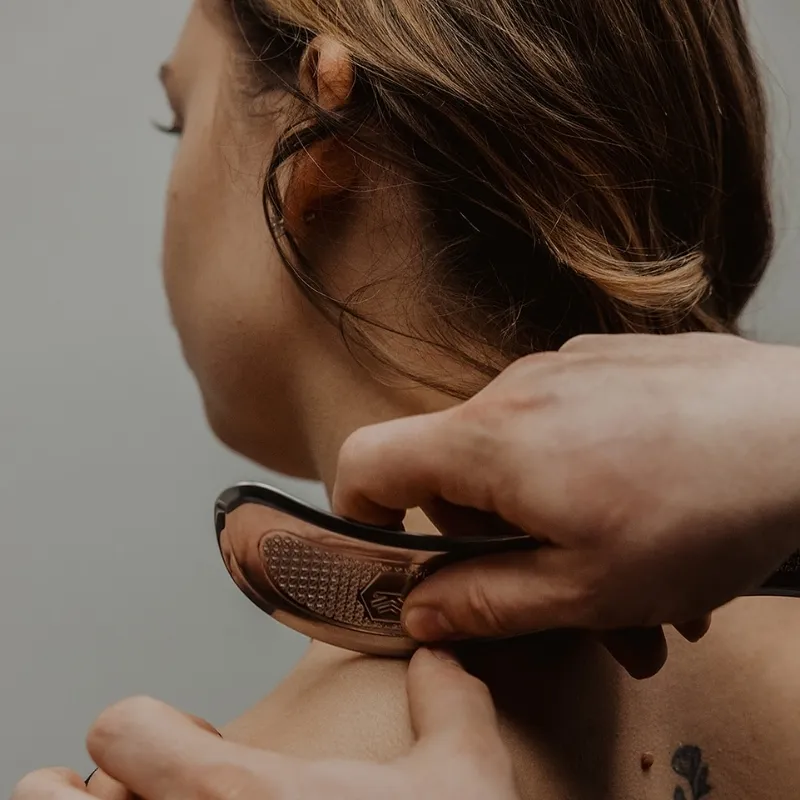
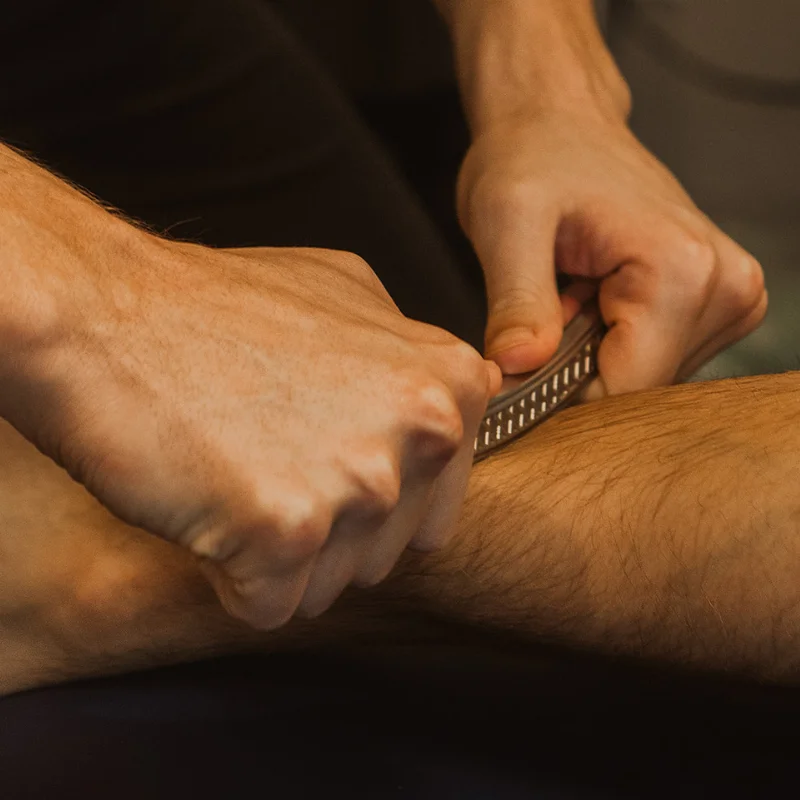
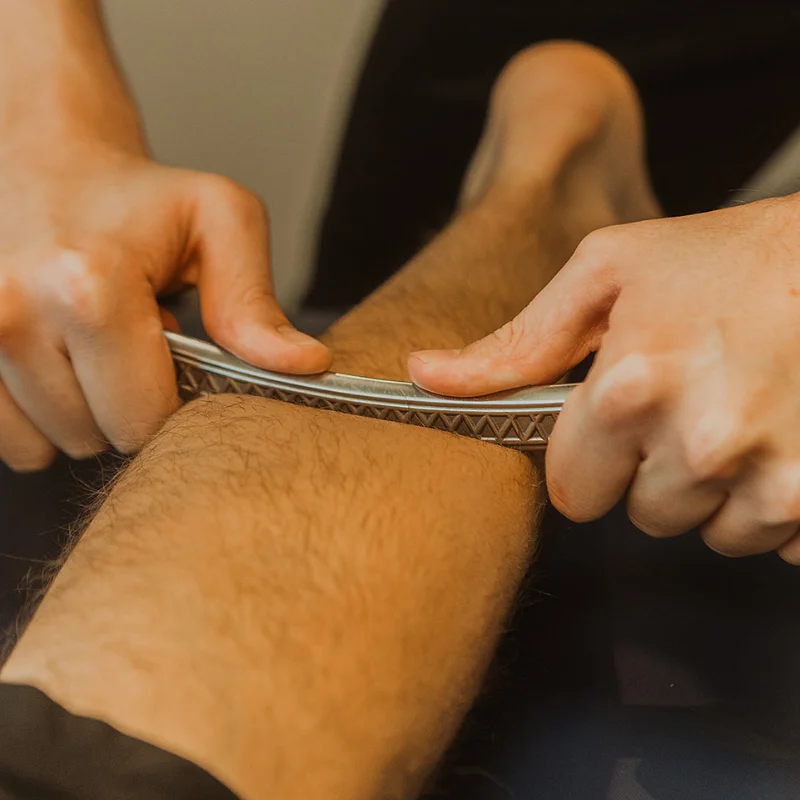
Instrument-Assisted Soft Tissue Mobilization is a hands-on treatment that uses stainless steel tools with smooth, beveled edges. These tools let your therapist feel what’s happening under your skin. When they glide over healthy tissue, the tool moves smoothly. When it hits a restriction or adhesion, you can actually feel the difference. It’s like running your hand over wood and hitting a splinter.
The technique has roots in traditional Chinese medicine, where they used similar tools for gua sha. But modern IASTM has evolved into a precise clinical tool used by Physiotherapists in Kelowna and other healthcare providers. The metal instruments give your therapist a mechanical advantage. They can work deeper into tissue without wearing out their thumbs and hands. And for you, that means more specific treatment that can reach problem areas manual therapy might miss.
These tools come in different shapes and sizes. Some are curved to fit around your calf or forearm. Others are flat for broader areas like your back. Your therapist chooses the right tool based on where you’re dealing with issues and what needs to be addressed.
How Does This Actually Work?
When you have scar tissue or fascial restrictions, they can stick to surrounding tissues. This creates adhesions that limit how your muscles and fascia slide past each other. Imagine trying to run with your shoelaces tied together. That’s kind of what your tissues are dealing with.
IASTM applies controlled pressure to these areas. The mechanical force from the tool may help break down adhesions and stimulate your body’s healing response. Research suggests this increases blood flow to the area, bringing in nutrients and oxygen while clearing out waste products. It may also trigger the production of new collagen, helping tissue remodel itself in a more organized pattern.
The tools also create a neurological effect. When they move across your skin, they stimulate nerve endings. This may help reset pain signals and improve how your nervous system processes information from that area. Some people report feeling less pain immediately after treatment, though responses vary.
You might see some red marks or small dots on your skin after treatment. That’s from pressure affecting tiny blood vessels near the surface. It’s temporary and usually fades within a few days. It’s not required for treatment to be effective, and the amount of marking varies from person to person.
Who Can Benefit from IASTM in Kelowna?
If you’re active in Kelowna, you’re probably hard on your body. Whether you’re hiking Knox Mountain, playing rec league hockey, or just keeping up with your kids at City Park, your muscles and connective tissues take a beating. IASTM may help with several common issues.
Chronic Muscle Tightness:
Maybe your IT band is always tight. Or your calves feel like rocks. When you’ve been dealing with tightness for months, manual therapy alone might not cut it. IASTM can work deeper and more specifically to address stubborn restrictions.
Old Injuries That Never Quite Healed
You sprained your ankle years ago, but it still doesn’t feel right. Or you had tennis elbow that improved but never fully resolved. Old injuries often leave behind scar tissue that limits movement. IASTM may help remodel that tissue and restore normal function.
Limited Range of Motion
You can’t fully squat anymore. Or raising your arm overhead feels restricted. When scar tissue and adhesions build up around a joint, they can physically limit how far you can move. Breaking down those restrictions may help restore your range.
Plantar Fasciitis
That stabbing pain in your heel when you get out of bed. Plantar fasciitis involves inflammation and tissue changes in the fascia on the bottom of your foot. IASTM can work along that tissue band to address restrictions and stimulate healing.
Shin Splints
If you run or play sports with lots of stopping and starting, shin splints can be brutal. The pain along your shinbone comes from stress on the muscles and connective tissue. IASTM may help reduce tension in these areas.
Post-Surgical Scar Tissue
After surgery, scar tissue can develop around the incision site. This can create restrictions in nearby muscles and fascia. IASTM can work around (not directly on) healing incisions to prevent excessive adhesions from forming.
If you’re a runner training for a race, a hockey player dealing with a groin strain, or a weekend warrior who overdid it on the mountain bike trails, IASTM might be worth considering. Even office workers dealing with chronic neck and shoulder tension from sitting at a desk all day may find relief with this treatment.
What To Expect During Treatment
Your first visit starts with an assessment. Your Physiotherapist will ask about your pain, movement issues, and what activities you’re having trouble with. They’ll watch how you move and test your range of motion. They’re looking for areas where tissue feels restricted or where movement is limited.
Once they identify problem areas, they’ll explain how IASTM might help. They’ll show you the tools and explain what you’ll feel during treatment. It shouldn’t be painful, but you might feel some discomfort when they work over restricted areas. Think of it as a “good hurt” rather than an “injury hurt.” You should always tell your therapist if something doesn’t feel right.
During treatment, your therapist applies a small amount of lotion or cream to your skin. This helps the tool glide smoothly. They’ll use different stroke patterns depending on what they’re treating. Sometimes they work along the muscle fibres. Other times they work across them. The angle and pressure change based on what your tissues need.
A typical IASTM session lasts about 10 to 15 minutes on the affected area. It’s usually combined with other treatments like stretching, strengthening exercises, or manual therapy. IASTM is a tool, not a complete treatment plan by itself.
Most people need multiple sessions. You might feel some improvement after the first treatment, but breaking down scar tissue and remodeling tissue takes time. Your therapist will recommend a treatment plan based on your specific condition and goals.
After treatment, you might feel a bit sore, similar to how you feel after a deep tissue massage. This usually eases within a day or two. Your therapist will give you exercises or stretches to do at home. These help maintain the improvements from treatment and prevent restrictions from forming again.
IASTM vs Other Treatment Options
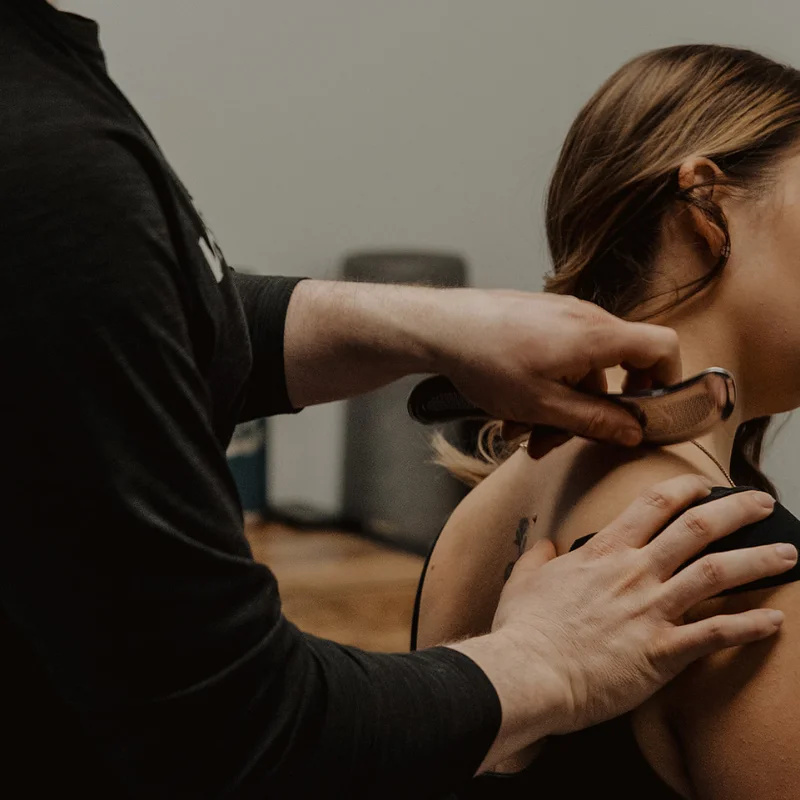
You might wonder how IASTM compares to other treatments. Here’s the thing: it’s not usually an either-or situation. IASTM often works best as part of a complete treatment plan.
Regular massage therapy uses hands to work on soft tissue. It can feel great and help with muscle tension. But IASTM tools can reach deeper layers and work more specifically on adhesions. Some people find IASTM more effective for stubborn restrictions that haven’t responded to massage alone.
Cupping therapy in Kelowna pulls tissue up, creating negative pressure. IASTM works in the opposite direction, applying pressure down into tissue. Both may help with blood flow and tissue mobility, but they work through different mechanisms.
Dry needling uses thin needles inserted into trigger points to release muscle tension. IASTM stays on the surface and works along broader areas of tissue. Some conditions respond better to one approach over the other. Your therapist can help you understand which might work best for your situation.
Foam rolling is something you do yourself. It can help with muscle tightness and is great for regular maintenance. But it’s broad and general. IASTM is more precise and can target specific problem areas that foam rolling might miss.
The best approach often combines techniques. Your Physiotherapist might use IASTM to break down restrictions, follow up with stretching to improve range of motion, then give you strengthening exercises to build stability. This comprehensive approach addresses the restriction, improves mobility, and prevents the problem from coming back.
Finding the Right Fit in Kelowna
Not everyone needs IASTM, and that’s okay. If you’re dealing with acute inflammation, open wounds, or certain skin conditions, IASTM might not be appropriate. People taking blood thinners should check with their doctor first. And if you have cancer or a history of blood clots, there are other treatment options that might be better.
The treatment works best when you’re committed to the process. That means showing up for sessions, doing your home exercises, and making the lifestyle changes your therapist recommends. If you’re training for Big White ski season or preparing for summer activities on Gyro Beach, IASTM can be part of getting your body ready.
At Pro Motion Clinic on Pandosy Street, we look at the whole picture. IASTM might be one part of your treatment plan, along with exercise therapy, movement education, and hands-on care. We work with active people who want to keep doing the things they love. Whether that’s hiking Knox Mountain Park, playing sports at MNP Place, or just being able to garden without pain.
We also work with ICBC claims, so if your injury resulted from a motor vehicle accident, we can help you through that process while you recover.
The Science Behind the Tools
Research on IASTM is still growing, but several studies have shown promising results. Studies on rats showed increased blood vessel growth and improved tissue healing after IASTM treatment. Human studies have found improvements in range of motion, pain levels, and function in people with various conditions.
One study looked at college football players with ankle injuries. After seven weeks of IASTM combined with other physical therapy, they showed significant improvements in range of motion. The researchers noted that scar tissue around the injury site appeared to remodel and become more organized.
Other research has focused on how IASTM affects pain. The mechanical stimulation from the tools may help “reset” pain signals being sent to your brain. This might explain why some people feel immediate relief, even though tissue remodeling takes longer.
What we know is that IASTM may help stimulate healing, improve tissue quality, and restore movement. Like many treatments in physical therapy, results vary from person to person. Some people respond quickly. Others need more time. Your Physiotherapist will track your progress and adjust your treatment plan as needed.
Making IASTM Part of Your Recovery
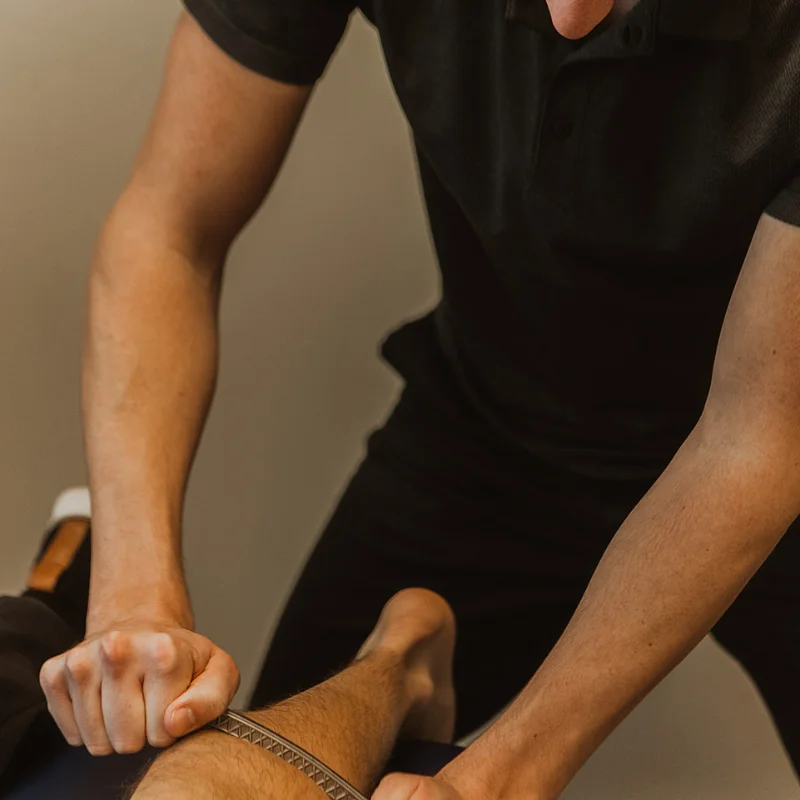
If you decide to try IASTM, here’s how to get the most from it. First, be honest about your pain levels. If something feels wrong during treatment, speak up. Your therapist can adjust the pressure or angle. Treatment should never feel unbearable.
Second, do your homework. The exercises and stretches your therapist gives you aren’t optional. They’re part of the treatment. IASTM breaks down restrictions and improves tissue quality, but exercise builds strength and stability so the problem doesn’t come back.
Third, be patient. Tissue remodeling doesn’t happen overnight. You might feel some immediate improvement in range of motion, but lasting changes take time. Most people need several weeks of consistent treatment and exercise to see significant improvement.
Fourth, pay attention to how your body responds between sessions. If you notice increased pain that doesn’t ease after a day or two, let your therapist know. They might need to adjust their approach. Some soreness is normal, but excessive pain isn’t.
Finally, think about prevention. Once you’ve addressed your current issue, what can you do to prevent it from happening again? Maybe that means better warm-ups before activity, regular stretching, or strengthening exercises. Your therapist can help you develop a maintenance plan.
Taking the Next Step
If you’re tired of dealing with pain or movement restrictions that aren’t improving, IASTM might be worth exploring. It’s not a magic cure, and it’s not right for everyone. But for many people dealing with stubborn soft tissue issues, it can make a real difference.
The first step is getting assessed. Come in and talk with a Physiotherapist about what you’re dealing with. They can evaluate your movement, identify restrictions, and recommend whether IASTM makes sense for your situation. If it does, they’ll create a treatment plan that fits your goals and timeline.
Pro Motion Clinic is located at #202-3030 Pandosy Street in Kelowna. You can reach us at (236) 420-0660 to book an assessment. We work with people at all activity levels, from competitive athletes to people who just want to move without pain. We accept ICBC claims and work with most extended health benefits.
Your body is designed to move. When scar tissue and restrictions get in the way, it affects everything you do. IASTM is one tool that may help break down those barriers and get you back to the activities that matter to you. Whether that’s training for your next race, keeping up with your family, or just moving through your day without discomfort, addressing soft tissue restrictions can make a real difference.
Don’t let old injuries or chronic tightness keep you on the sidelines. Come talk to us about how IASTM might fit into your treatment plan. We’ll help you figure out the best path forward and work with you every step of the way.
Real results, real people
Ready to move better in Kelowna?
Book online or call our team — direct billing is available for most extended health plans.